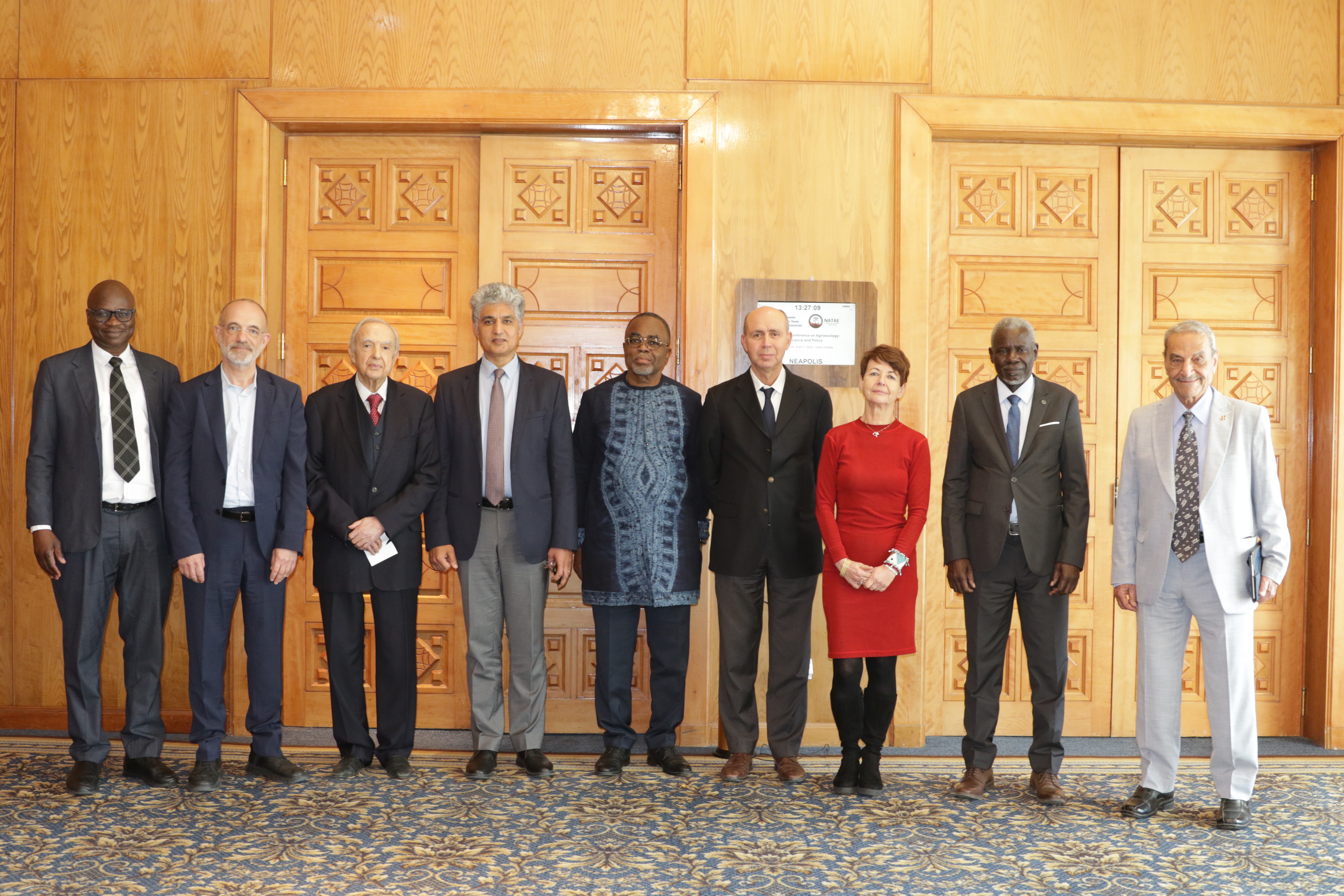
27e Session du Comité d’Orientation Stratégique de l’OSS, Tunis, 28 janvier 2025
Tenue le 28 janvier 2025 à Tunis, la 27e session du Comité d’…
17 juin 2026
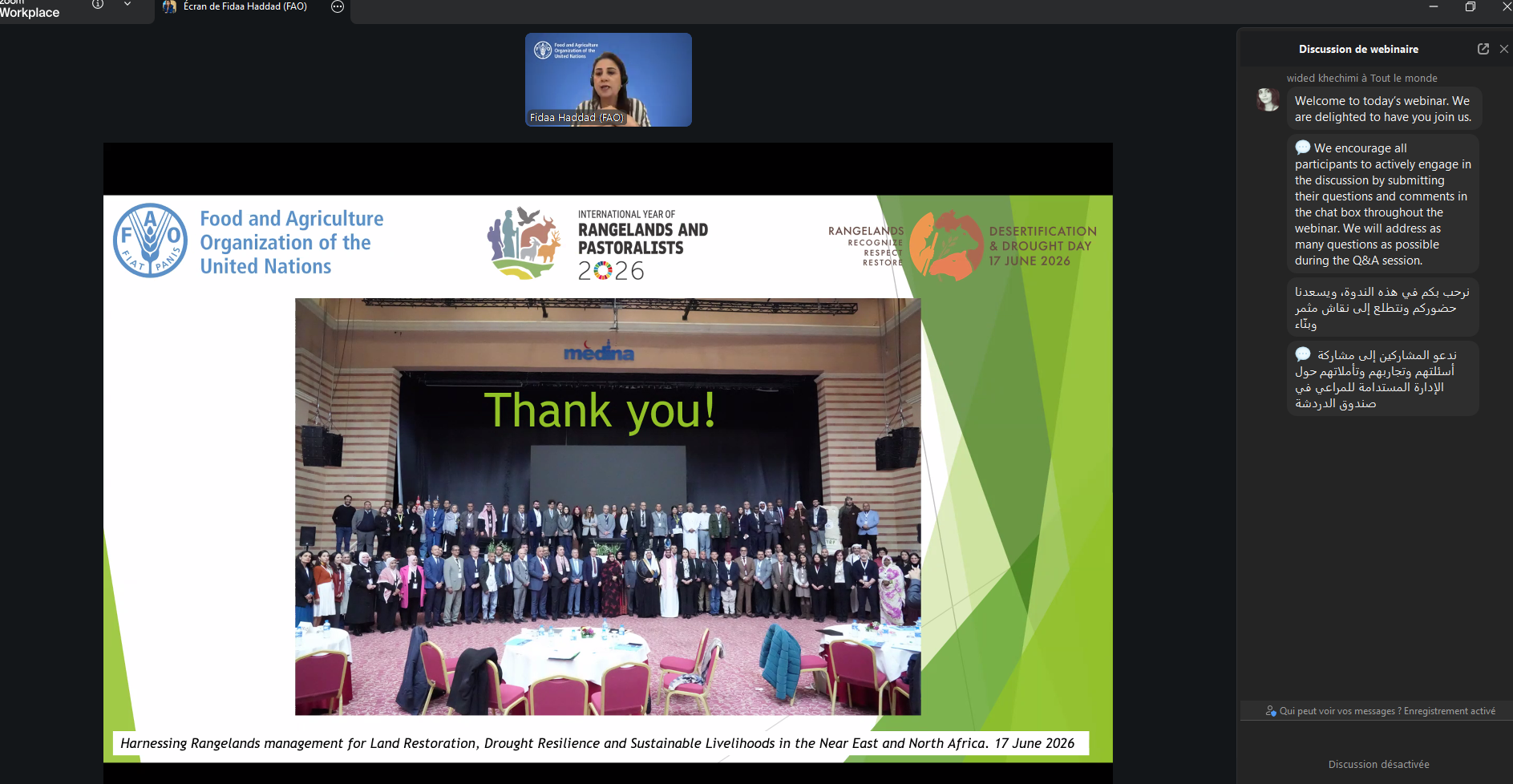
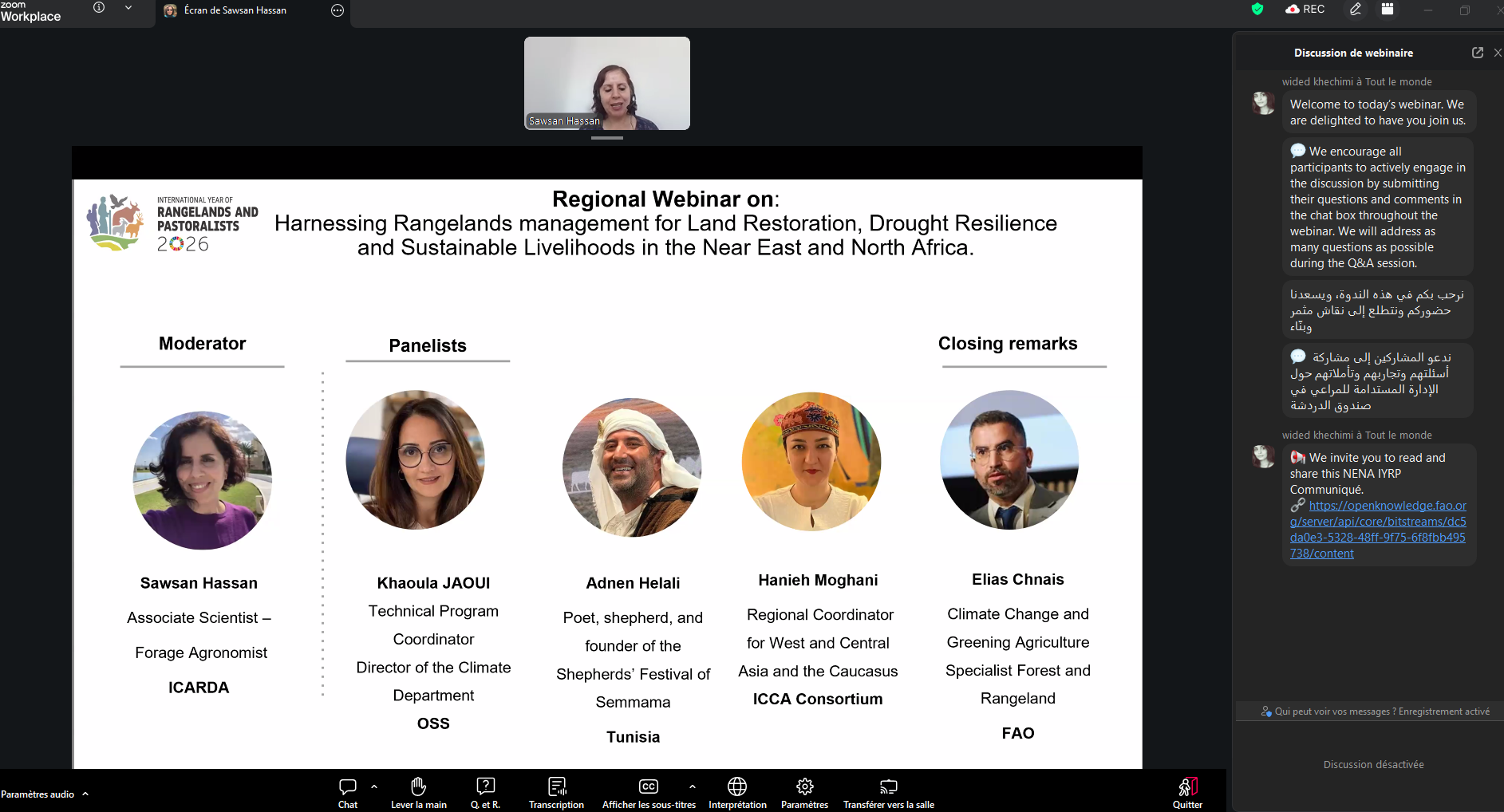
A l’occasion de la Journée mondiale de la lutte contre la désertification et la sécheresse, le Consortium de l’Année internationale des parcours et des éleveurs (AIPE) pour la région Proche-Orient et Afrique du Nord (NENA) a organisé un webinaire régional consacré au rôle des parcours dans la restauration des terres, la résilience à la sécheresse et la durabilité des moyens de subsistance.
Sous la coordination du Bureau régional de la FAO pour la région NENA et avec l’appui des membres du Consortium, dont l’OSS, l’ICARDA, l’ILC, la Ligue des États arabes (LAS), l’AOAD, le CEDARE et l’UICN, cette rencontre a réuni décideurs, chercheurs, partenaires du développement, représentants des communautés pastorales et experts techniques de toute la région.
Placée sous le thème « Reconnaître, respecter, restaurer », cette rencontre a mis en évidence le rôle déterminant des parcours dans la restauration des terres dégradées, la conservation de la biodiversité, l’adaptation aux changements climatiques et le renforcement de la résilience des communautés qui en dépendent.
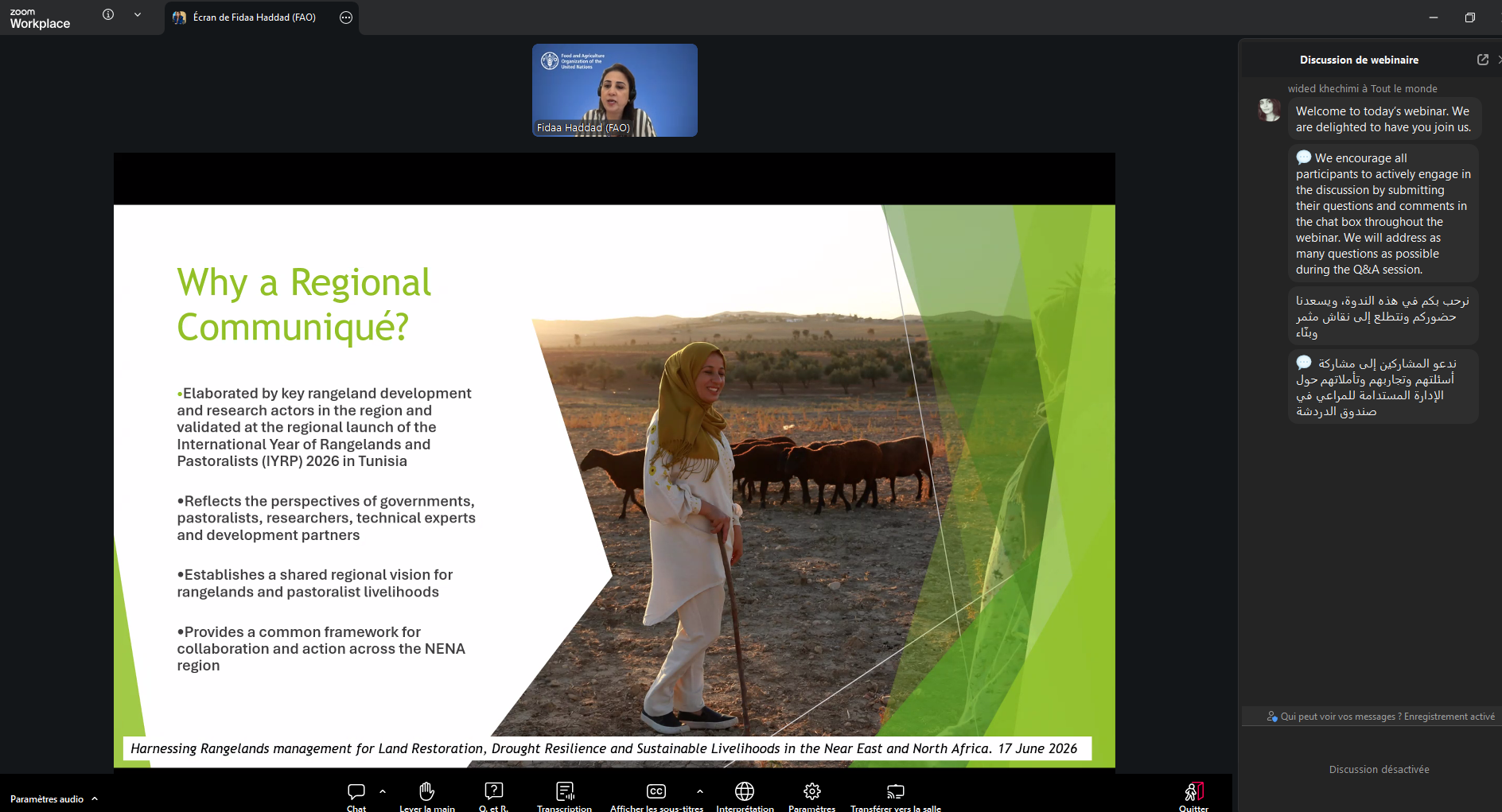
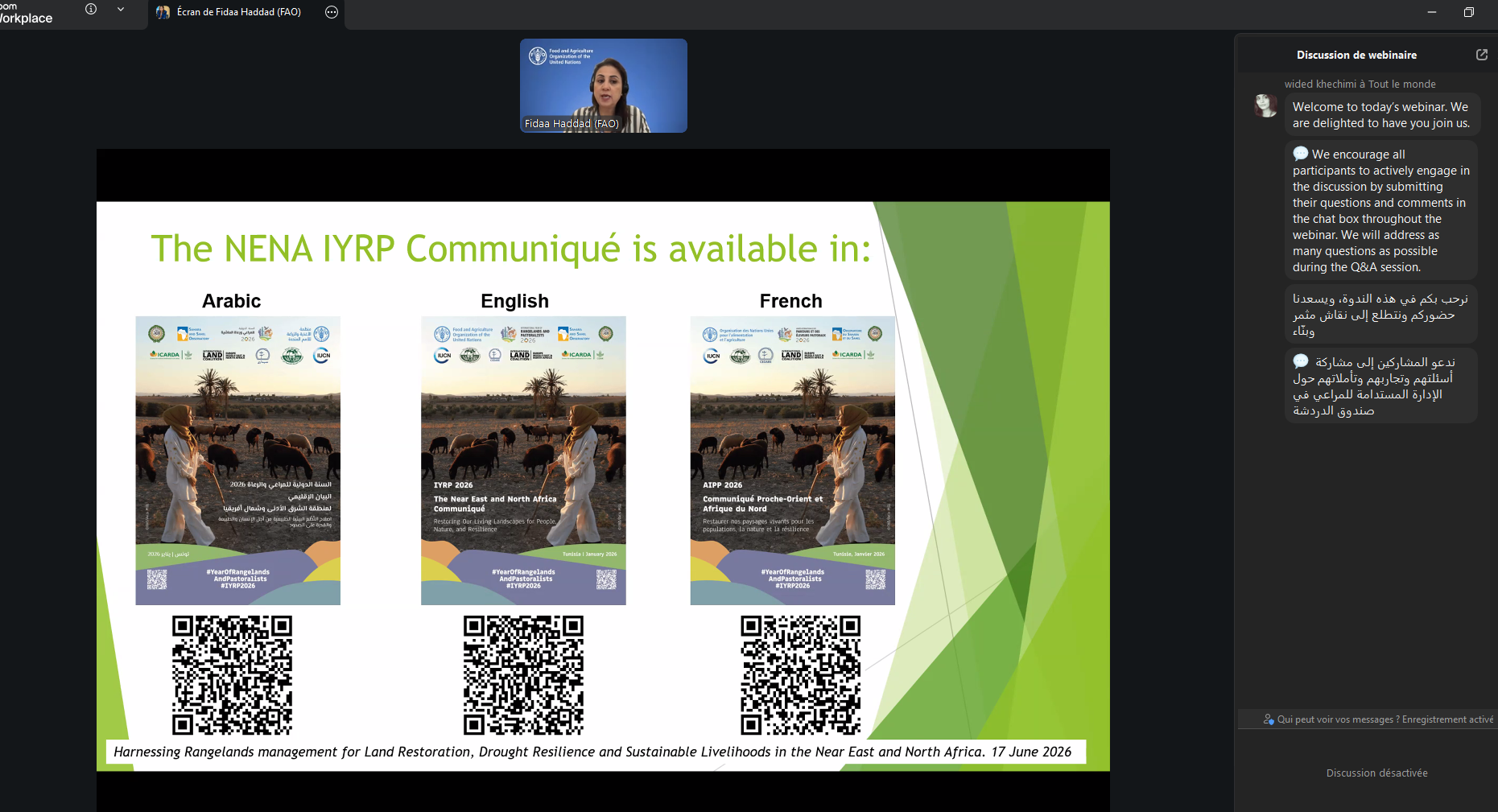
L’un des temps forts du webinaire a été le lancement officiel du communiqué régional du Consortium NENA de l’AIPE. Élaboré à travers un processus participatif associant de nombreux acteurs régionaux, ce document définit des priorités communes et des recommandations destinées à renforcer la gestion durable des parcours et à promouvoir une meilleure prise en compte des communautés pastorales dans les processus décisionnels, notamment dans la perspective de la dix-septième Conférence des Parties à la Convention des Nations Unies sur la lutte contre la désertification (COP17).
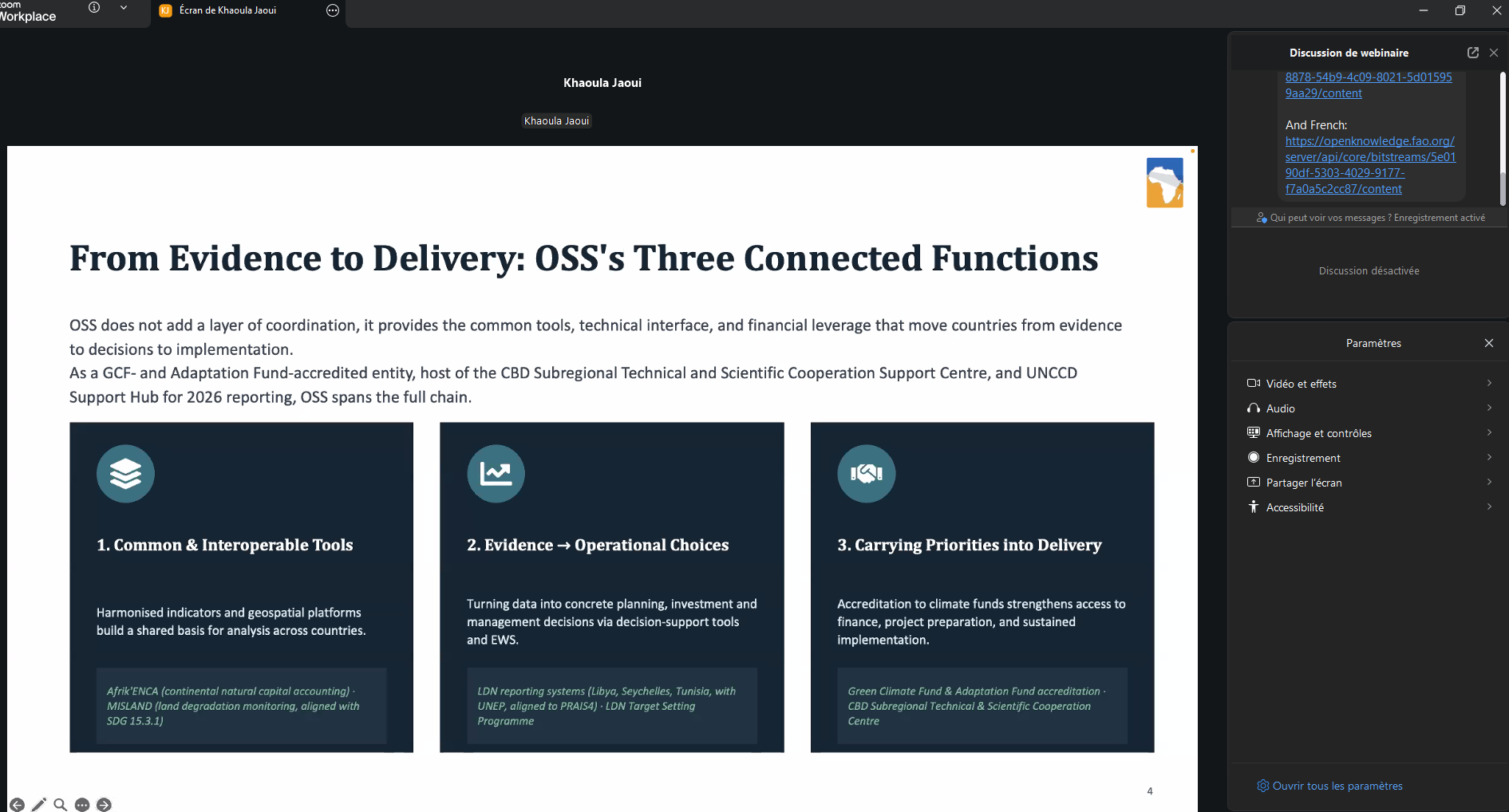
Lors de la table ronde de haut niveau, Mme Khaoula Jaoui, Coordinatrice des programmes techniques et Directrice du Département Climat de l’OSS, a souligné que les parcours ne devaient plus être considérés comme une question périphérique, mais comme un axe stratégique permettant de rapprocher les agendas du climat, de la biodiversité et de la restauration des terres. Elle a également insisté sur l’importance de la coopération régionale, des systèmes harmonisés de suivi et d’une prise de décision fondée sur des données fiables pour intégrer pleinement les parcours dans les politiques publiques.
S’appuyant sur l’expérience de l’OSS à travers l’Afrique, Mme Jaoui a présenté plusieurs initiatives illustrant le potentiel des parcours comme vecteur de résilience et de développement durable. Elle a notamment mis en avant le projet de renforcement de la résilience des écosystèmes à alfa et des communautés locales du Centre-Ouest tunisien face aux impacts des changements climatiques, qui associe restauration écologique, amélioration de la gouvernance et diversification des moyens de subsistance. Elle a également évoqué le projet DRESS-EA, qui renforce la résilience des petits exploitants agricoles et des éleveurs grâce à des systèmes d’alerte précoce et à des mesures d’adaptation à la sécheresse, ainsi que le projet AdaptWAP, qui soutient la gestion concertée des écosystèmes transfrontaliers et l’adaptation climatique en Afrique de l’Ouest.
Forte de ces expériences, l’OSS a plaidé pour que quatre priorités soient portées au cœur des discussions de la COP17 : mettre un terme à la conversion non durable des parcours, reconnaître la mobilité pastorale comme une stratégie d’adaptation légitime, renforcer les systèmes partagés de données et de suivi, et mobiliser des financements capables de transformer les initiatives réussies en programmes d’investissement à grande échelle.
Les échanges ont également souligné la nécessité de renforcer la sécurité foncière, la gouvernance inclusive, le partage des connaissances et la participation effective des communautés pastorales aux processus décisionnels.
À l’approche de la COP17, le webinaire a réaffirmé un message clair : les parcours constituent une solution stratégique pour restaurer les terres, renforcer la résilience à la sécheresse, préserver la biodiversité et soutenir durablement les moyens de subsistance de millions de personnes.
Forte de son expérience en Afrique du Nord, au Sahel, en Afrique de l’Est et en Afrique de l’Ouest, l’OSS entend poursuivre sa mobilisation aux côtés de ses partenaires afin de transformer les engagements en actions concrètes et les initiatives pilotes en investissements durables. Car restaurer les parcours, c’est investir simultanément dans les écosystèmes, les communautés pastorales et la résilience des territoires.
Tenue le 28 janvier 2025 à Tunis, la 27e session du Comité d’…
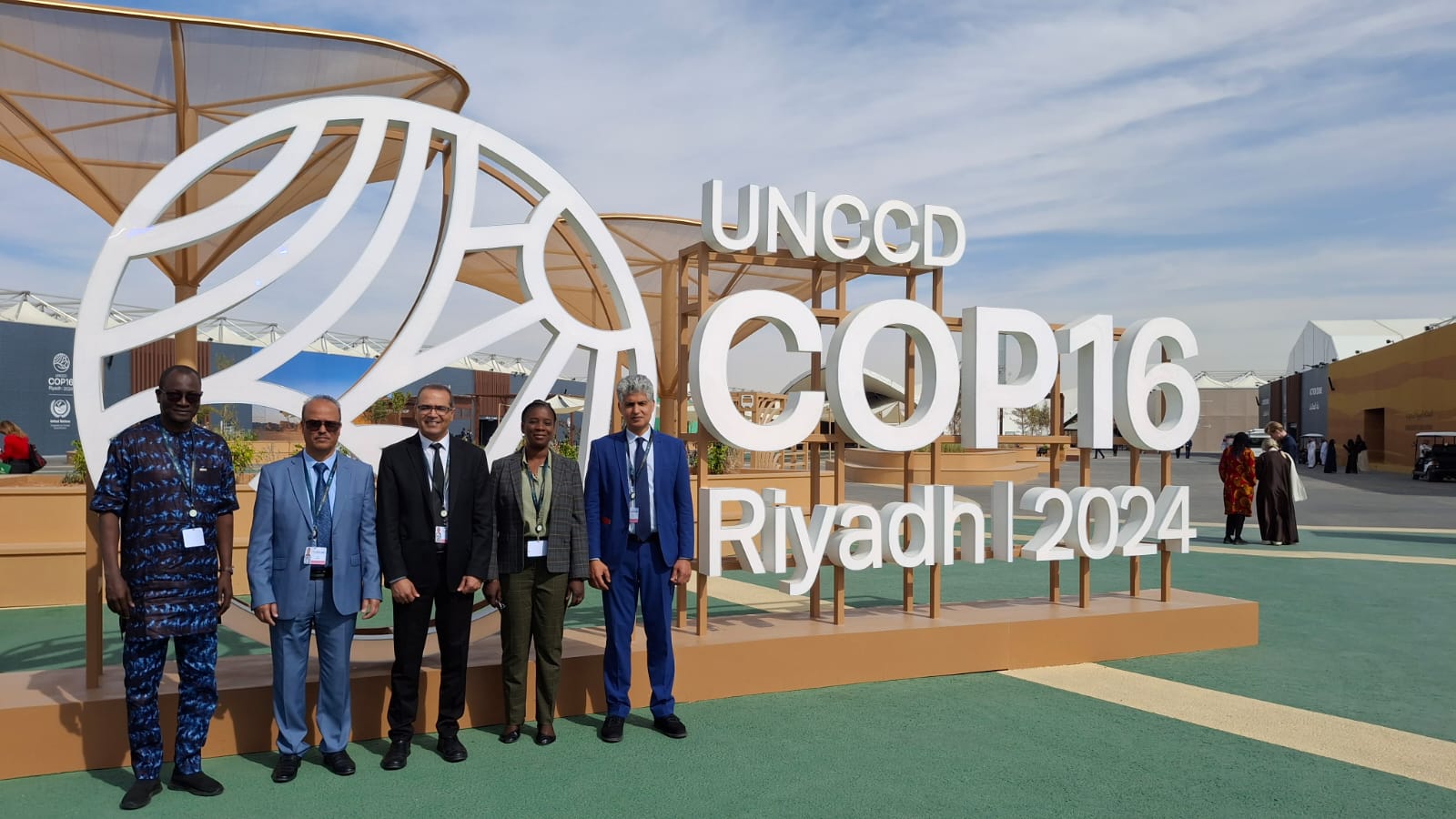
La participation de l'Observatoire du Sahara et du Sahel…
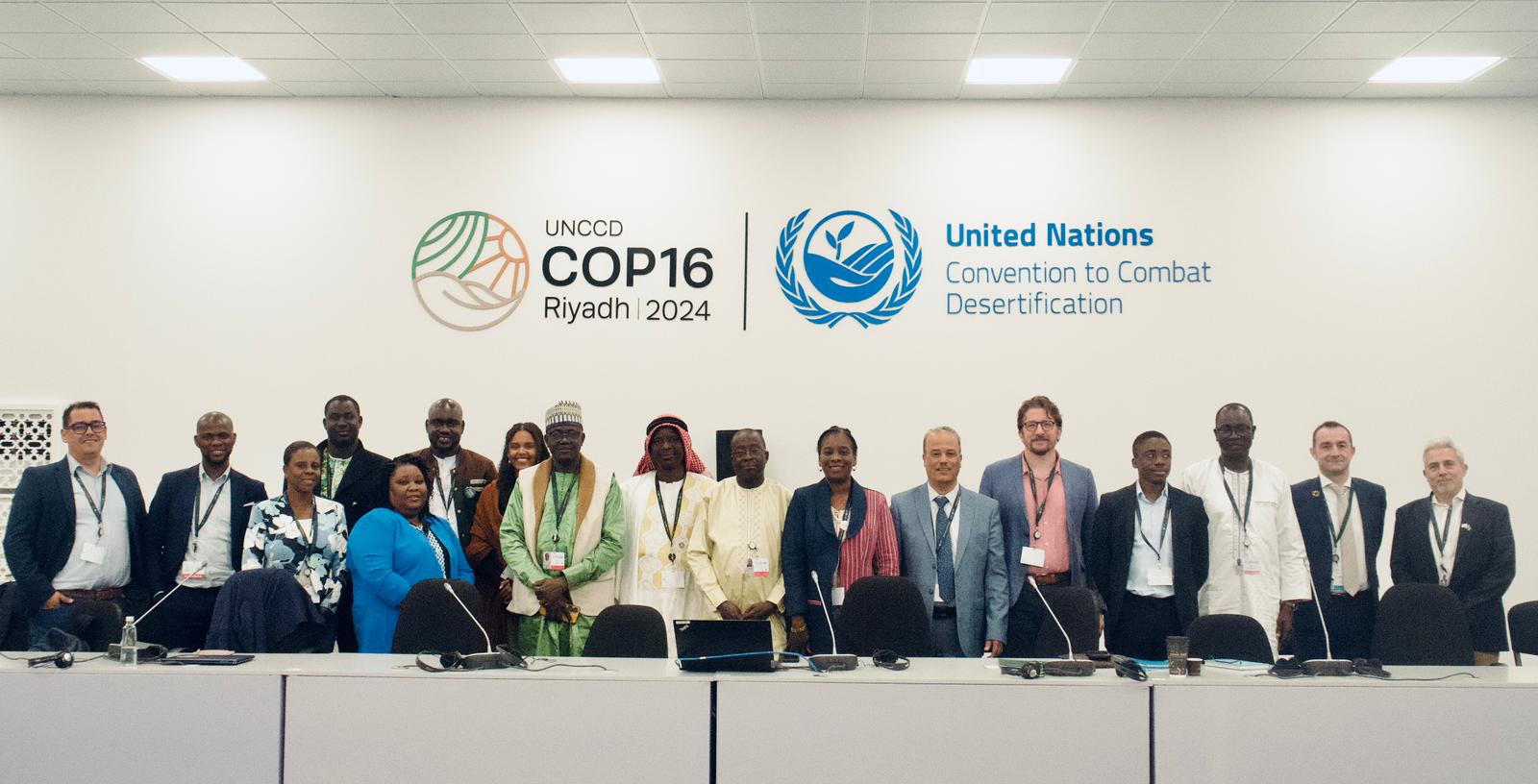
Evénement parallèle de l’OSS en marge de la COP 16 : renforcer…