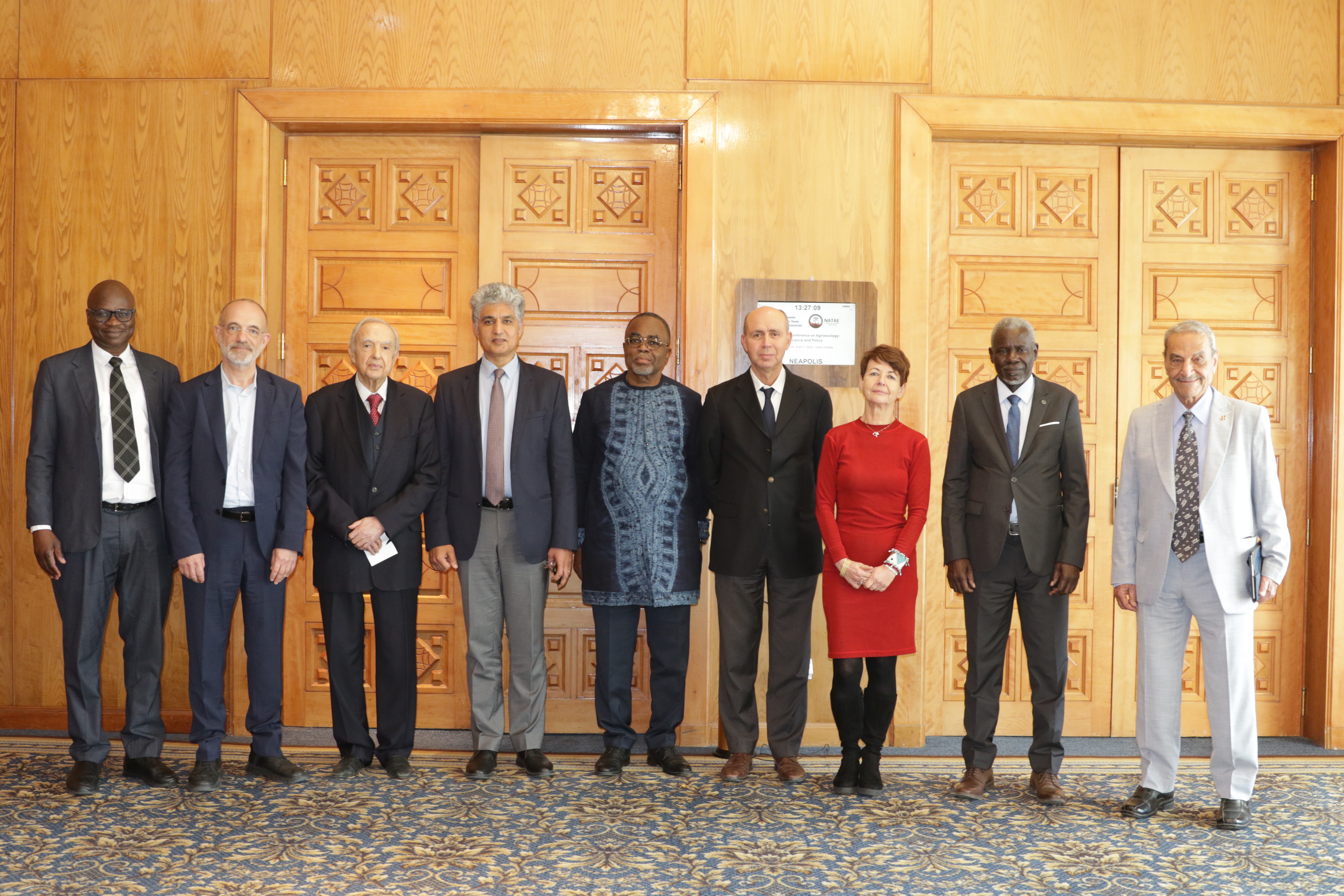
27th Session of the OSS Strategic Orientation Committee, Tunis, January 28, 2025
Held on January 28, 2025 in Tunis, the 27th session of the Strategic Orientation…
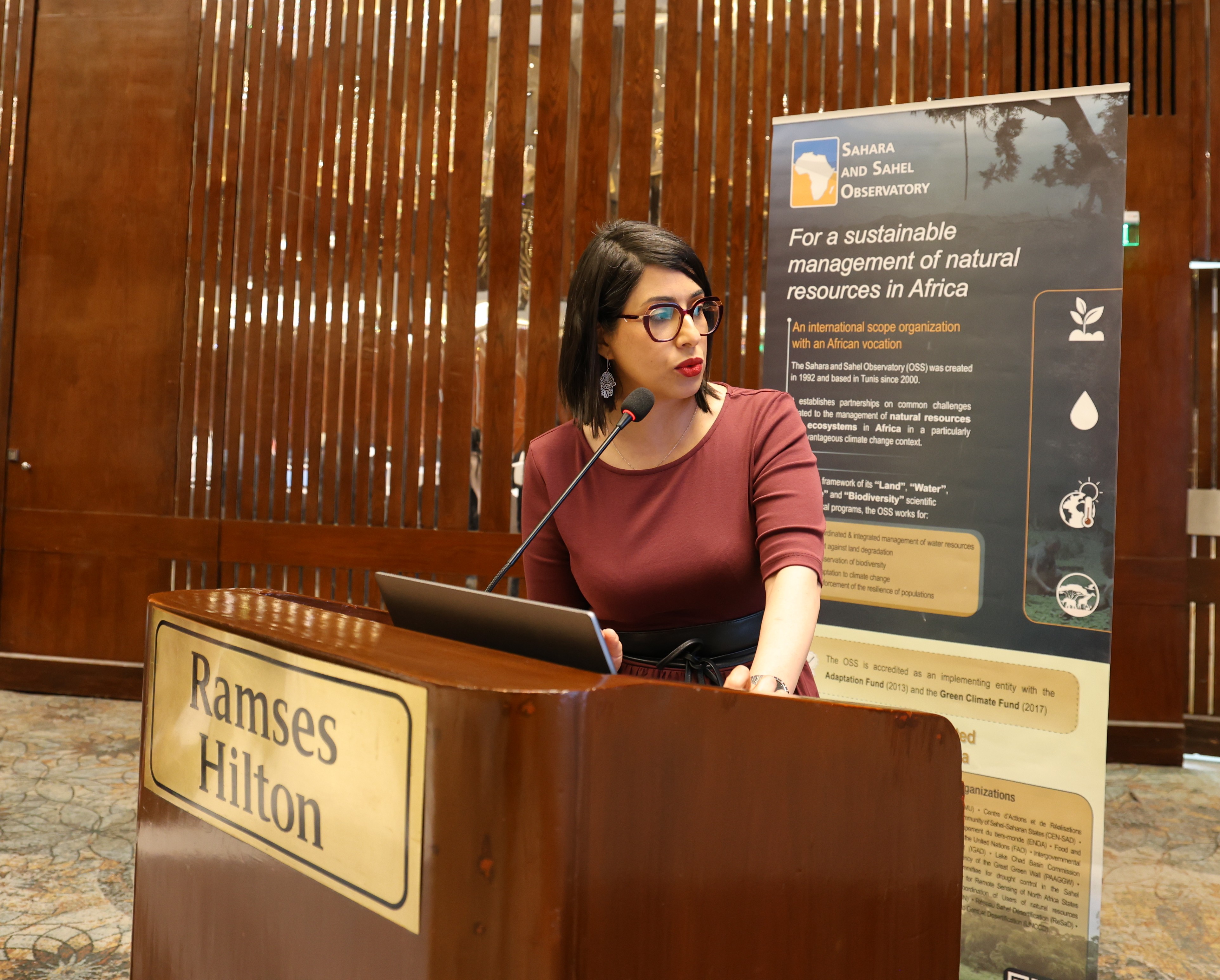
Cairo, April 27, 2026
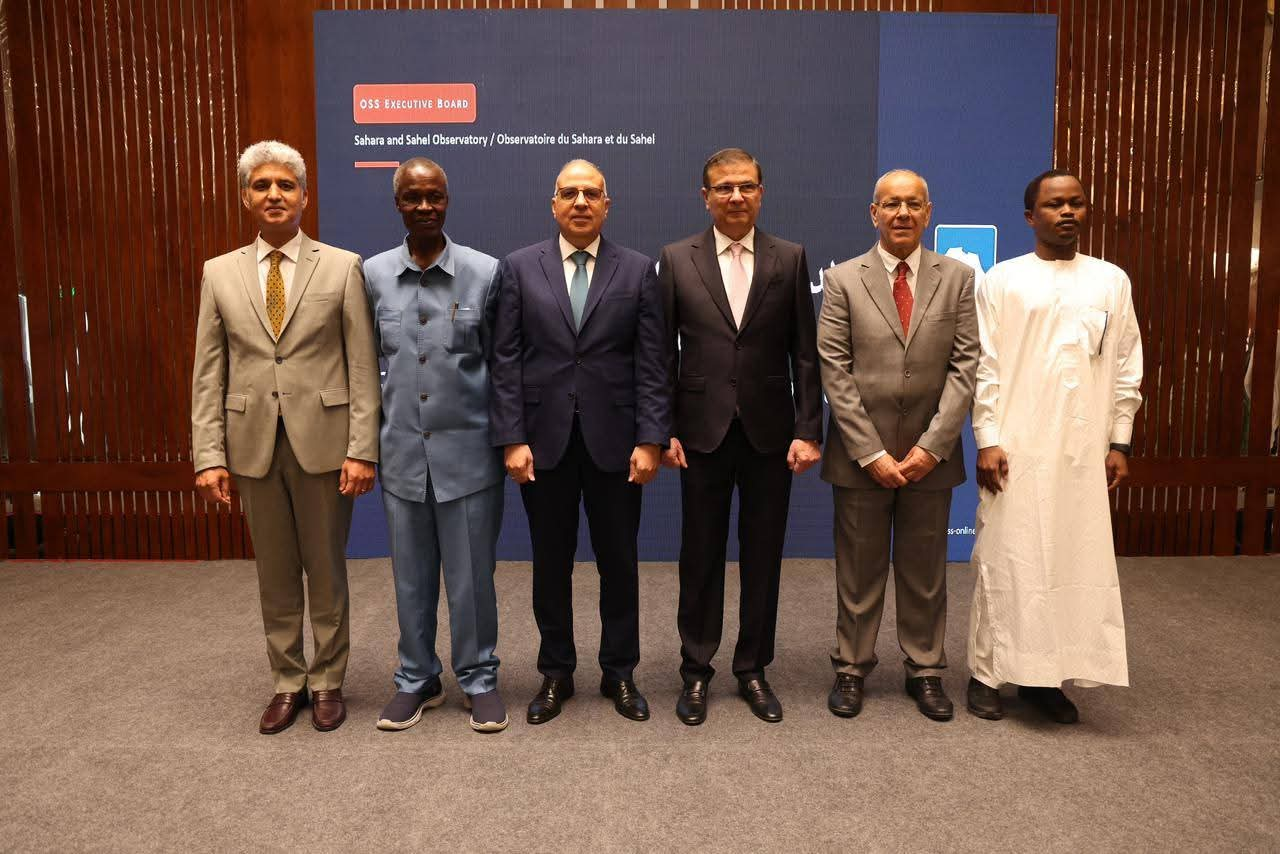
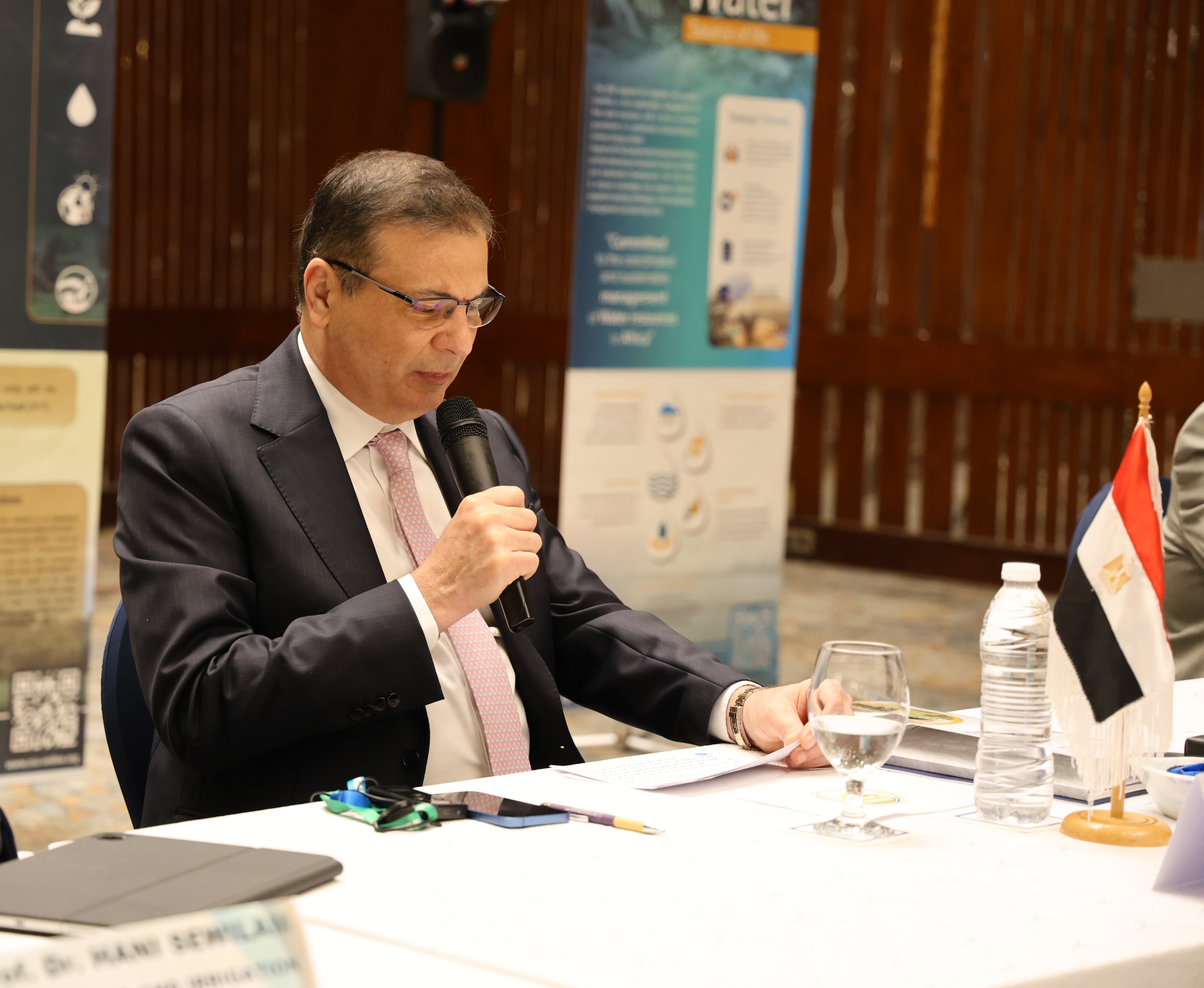
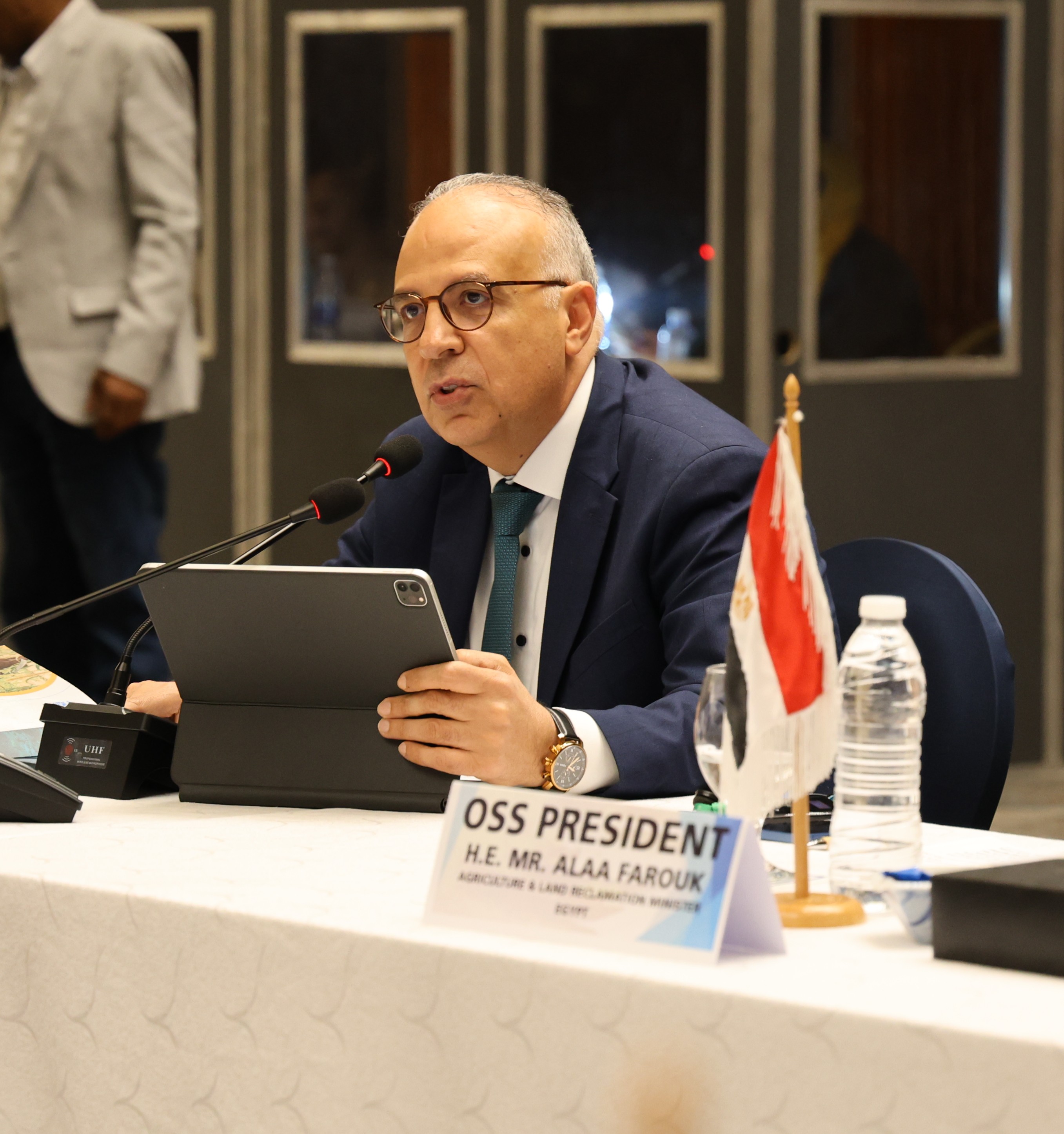
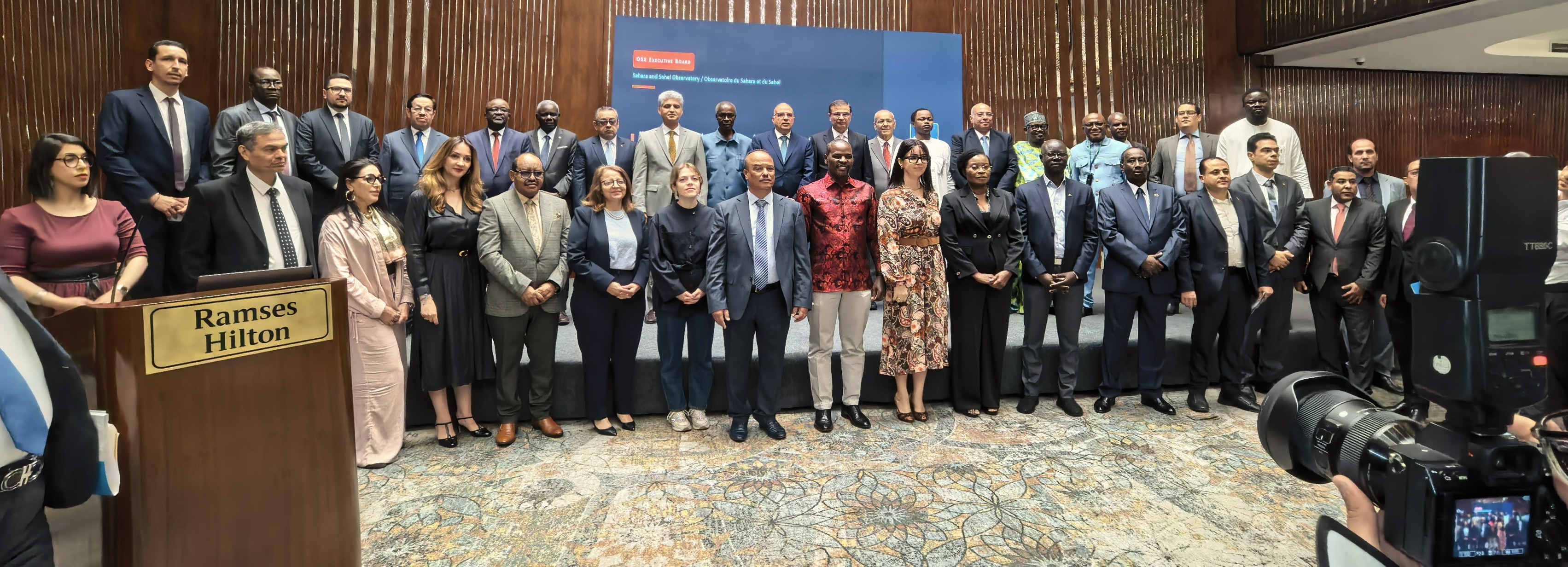
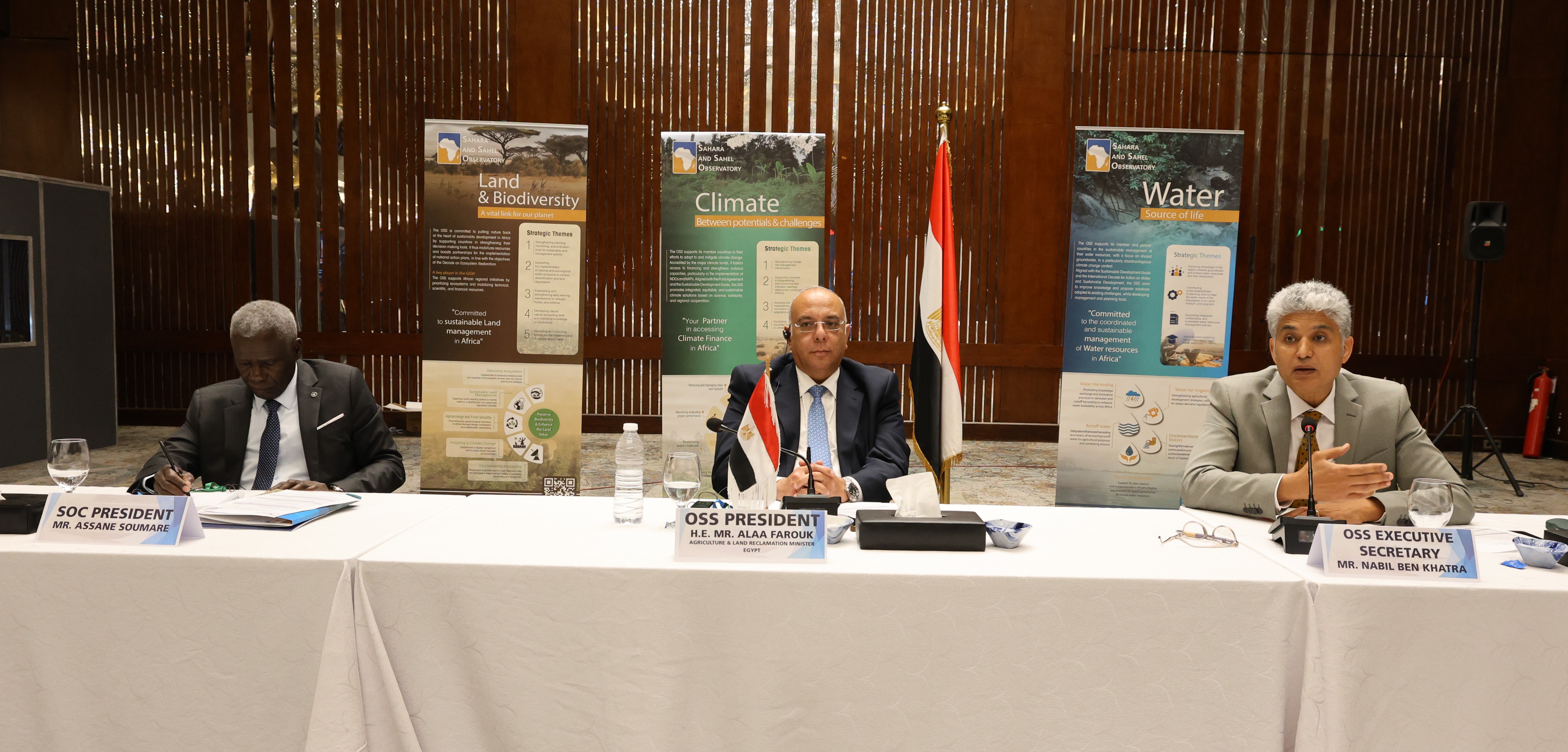
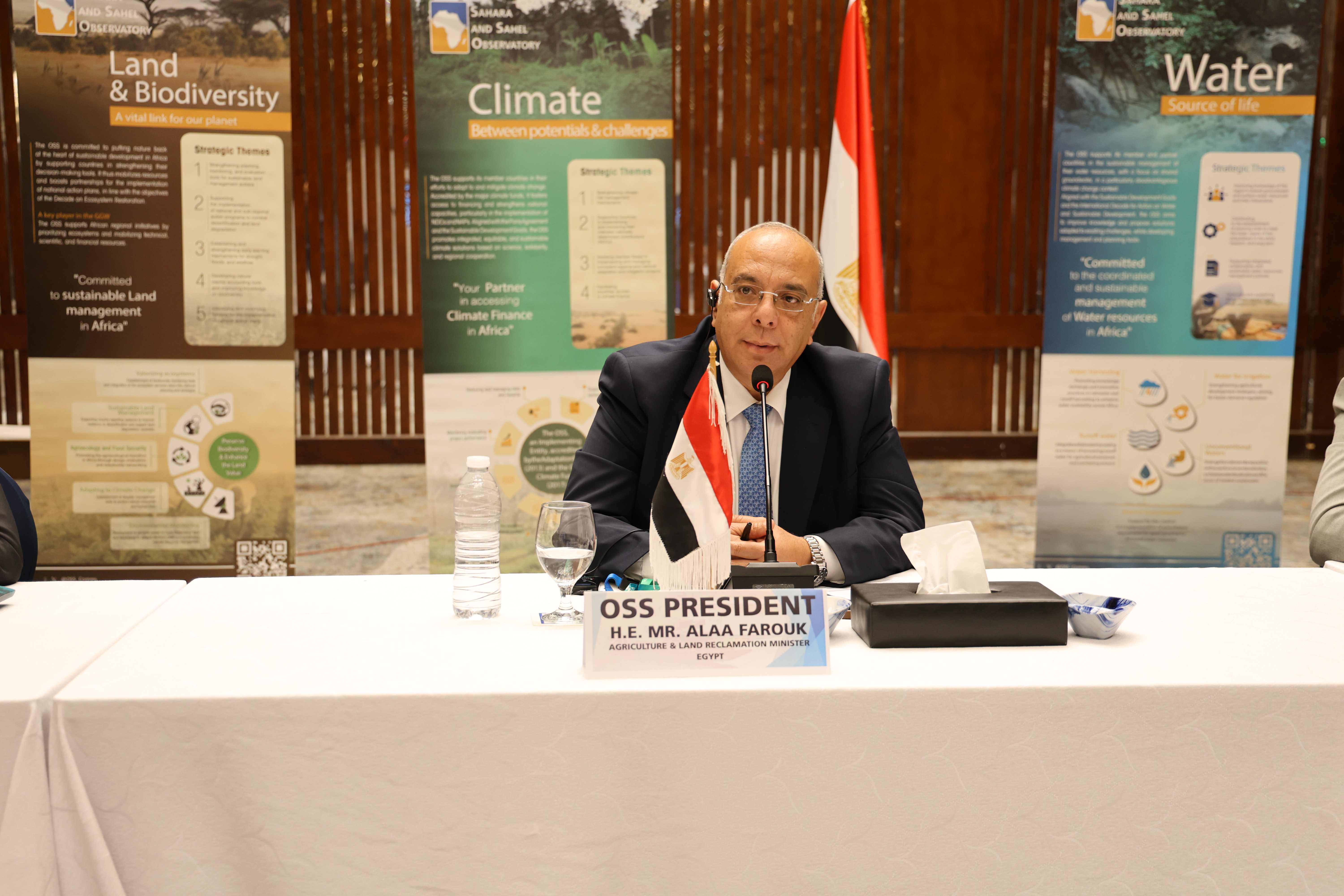
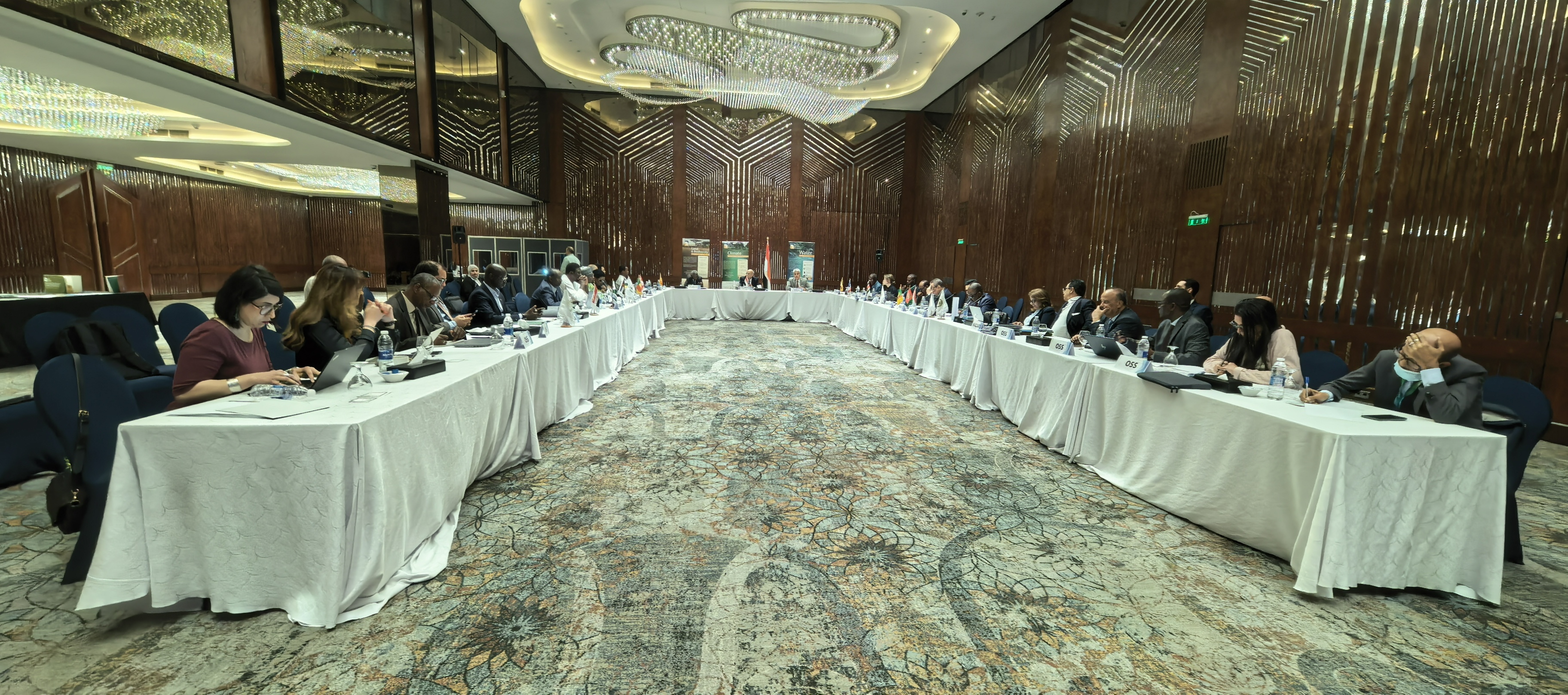
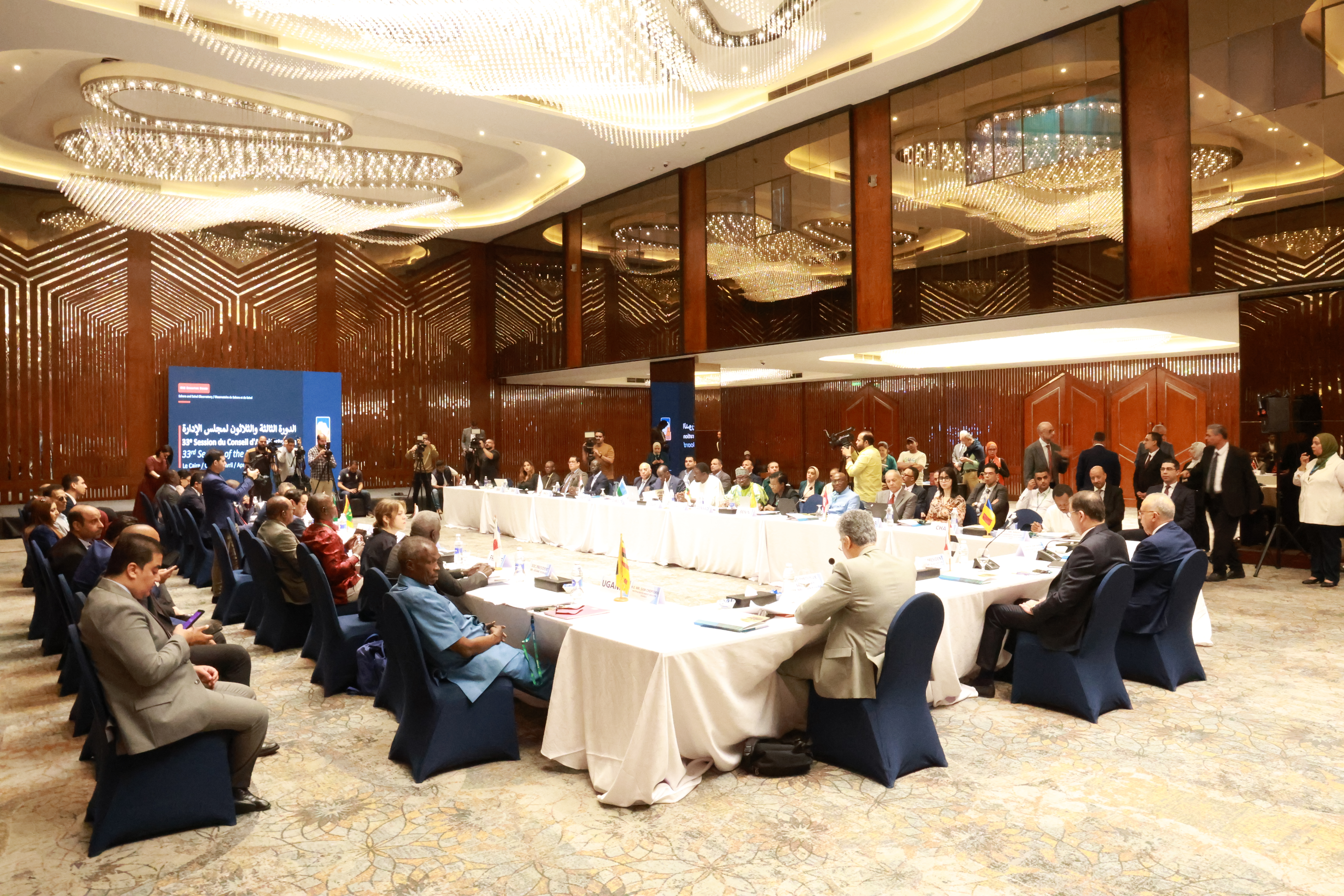
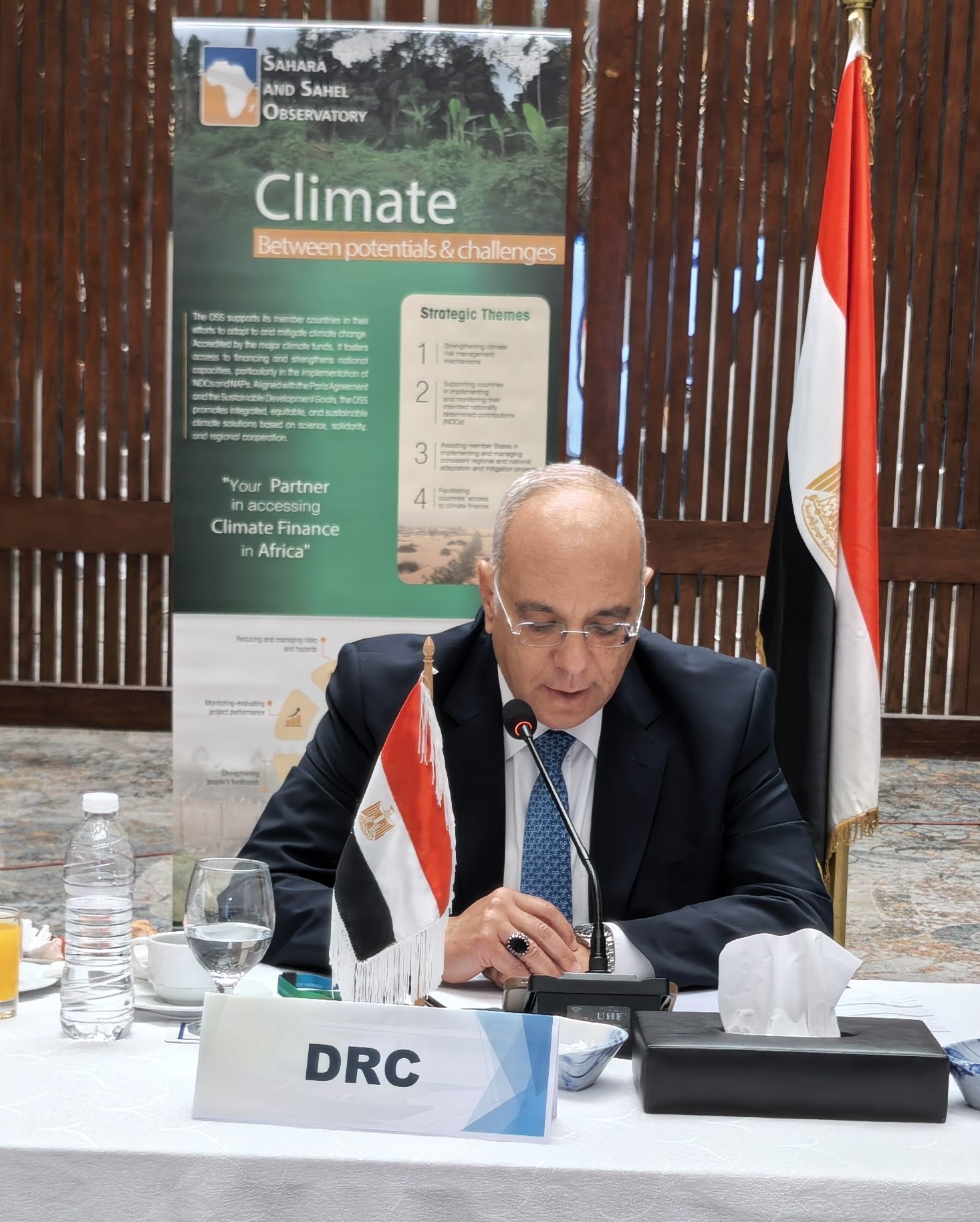
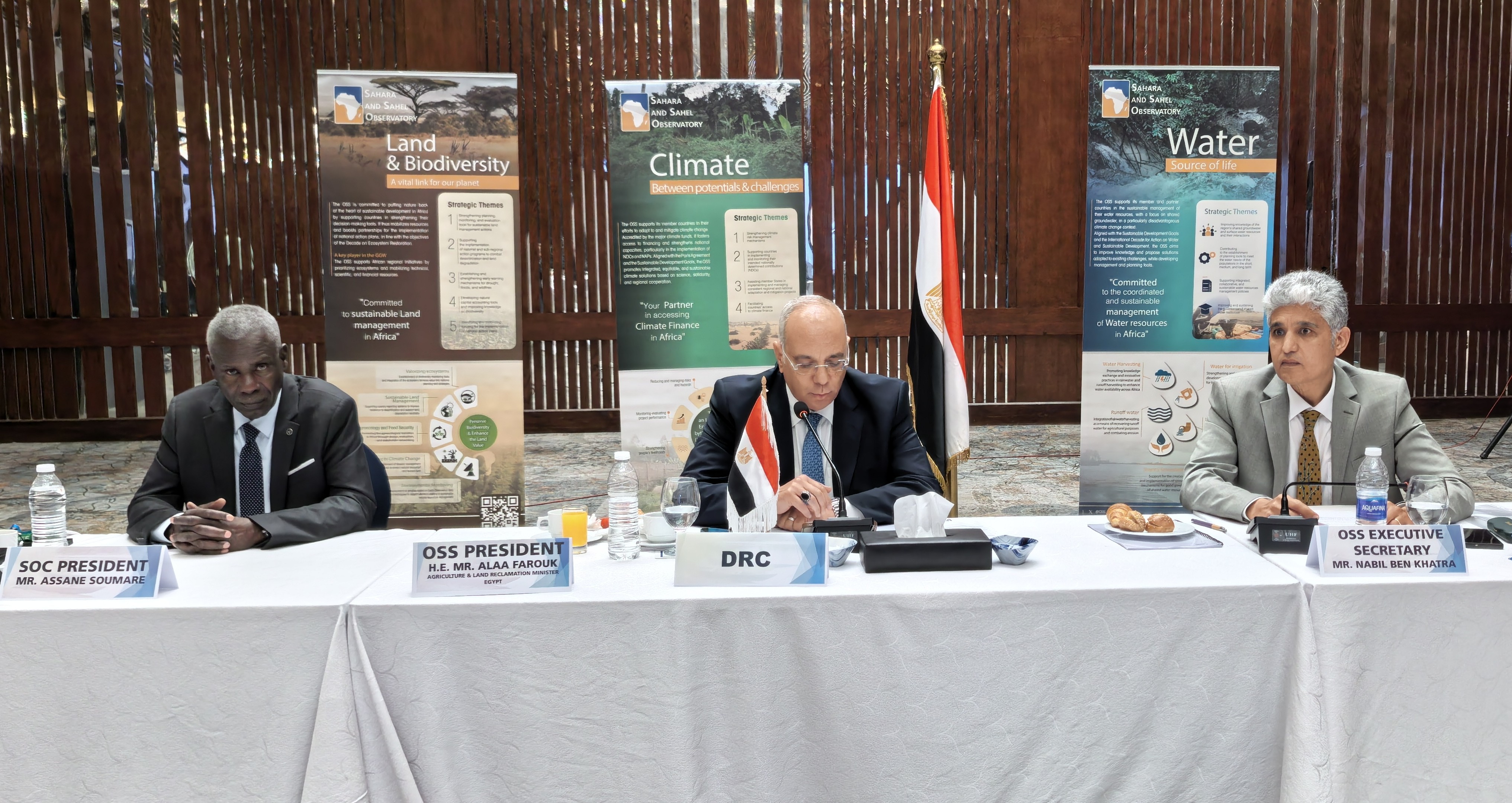
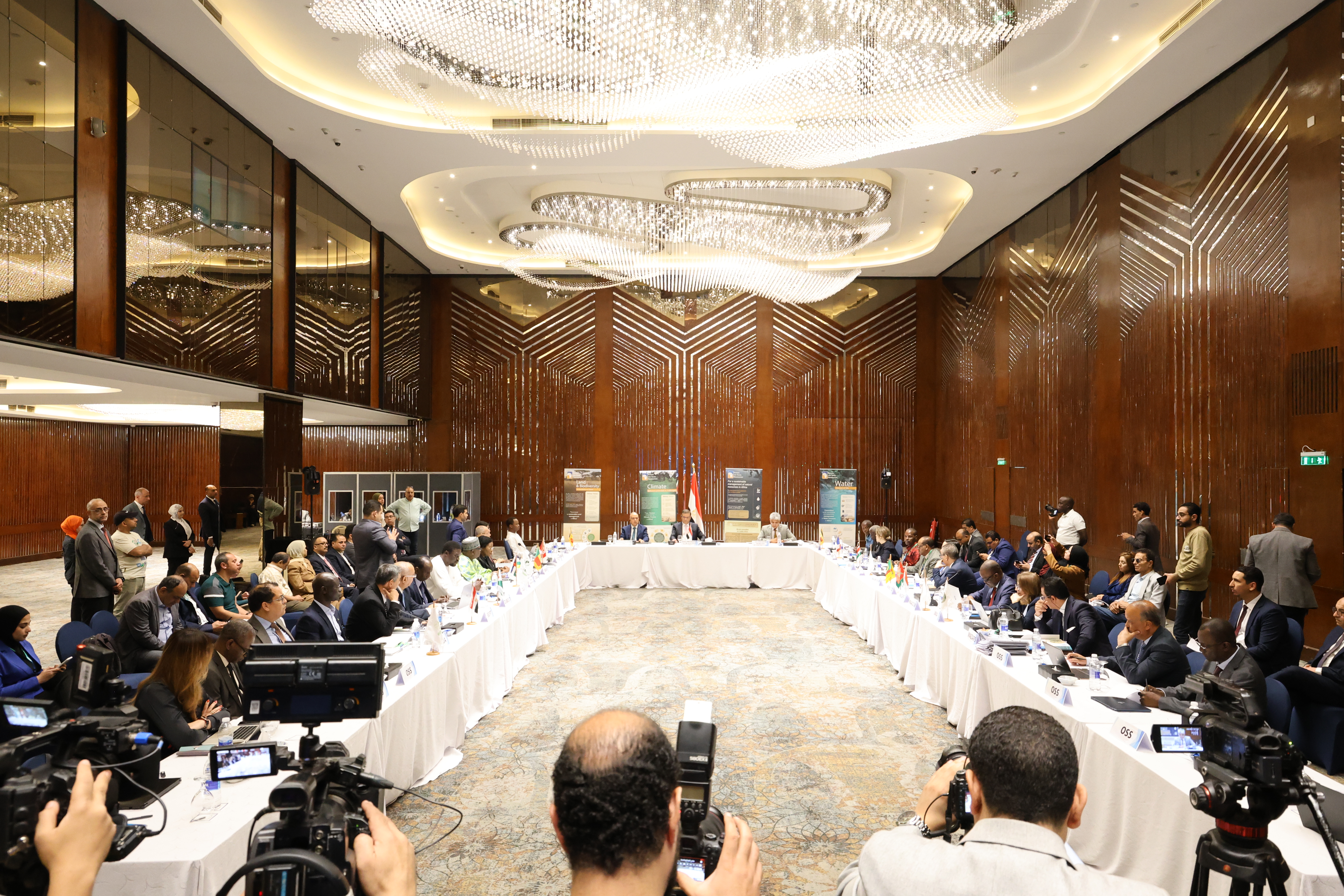
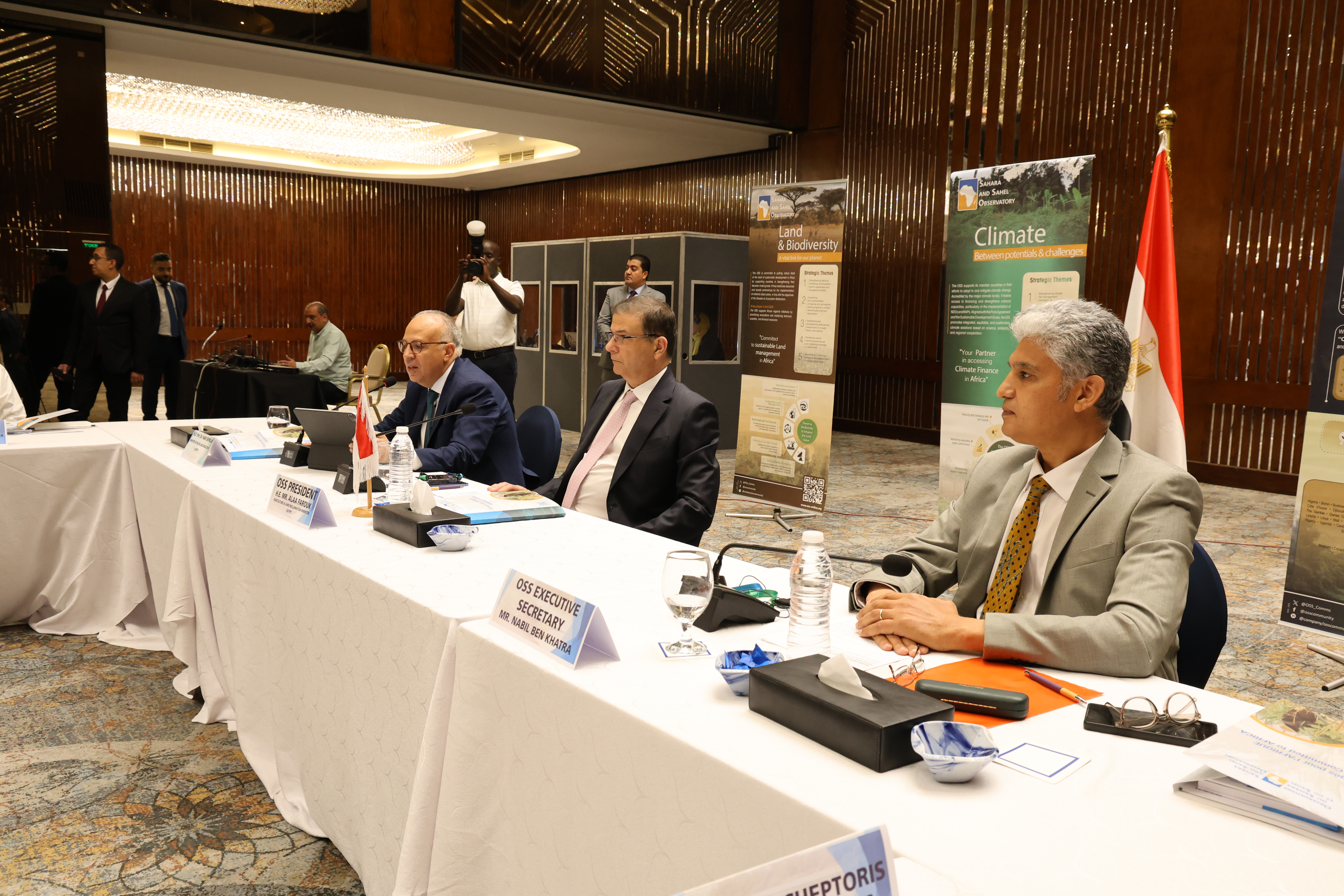
Upon invitation of the Arab Republic of Egypt, the Sahara and Sahel Observatory held the 33rd session of its Executive Board in Cairo. Member countries and Organizations endorsed a renewed strategic direction for the Organization. Three priorities shaped the event: strengthening institutional resilience, consolidating governance, and mobilizing stakeholders in response to the growing pressure on the continent’s natural resources.
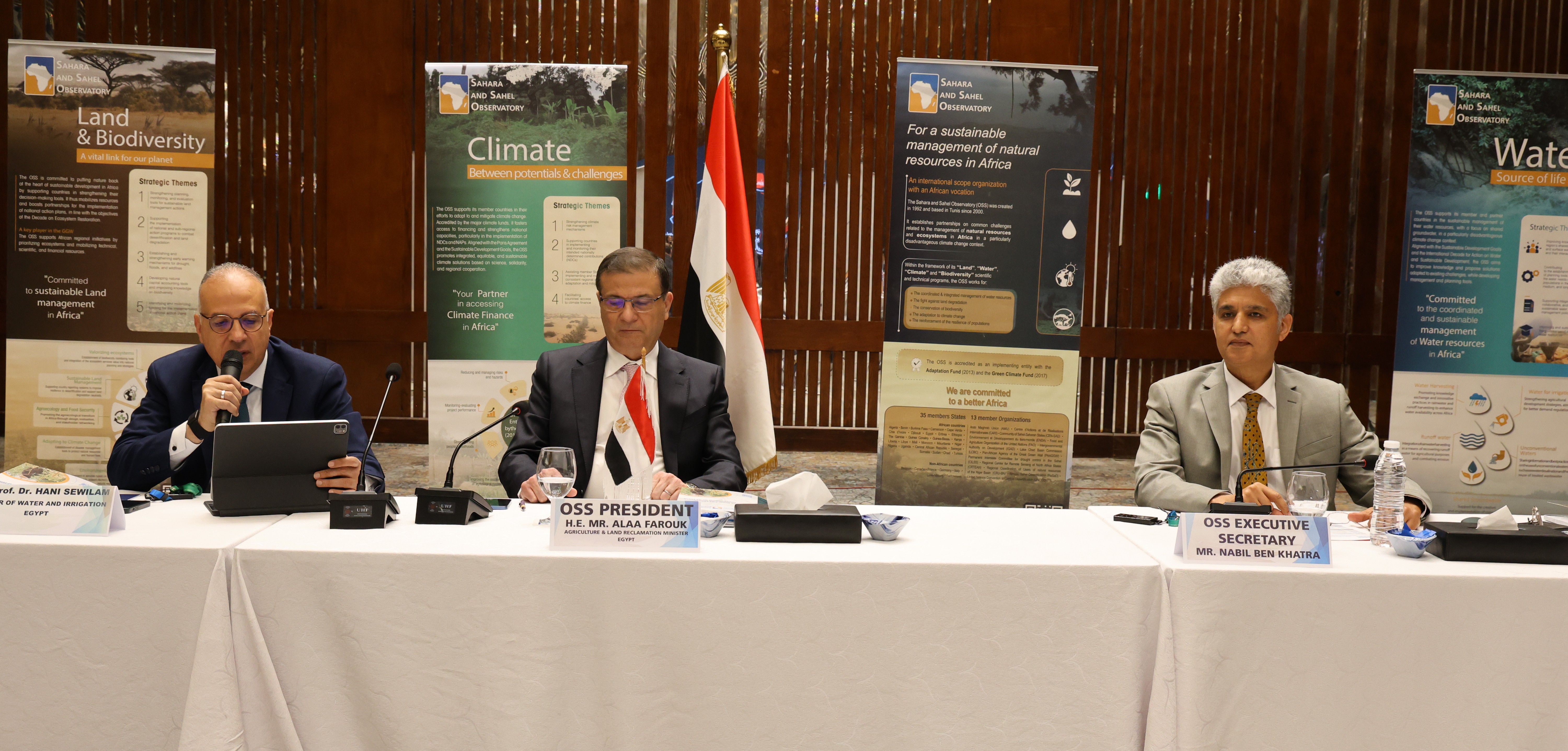
The session was opened by H.E. Mr. Alaaeldin Farouk Zaki Elsayed, Minister of Agriculture and Land Reclamation of Egypt and OSS Chairman, in the presence of H.E. Mr. Hani Sewilam, Minister of Water Resources and Irrigation who both underscored the more-than-ever important role of the Organization in Africa’s response to climate challenges.
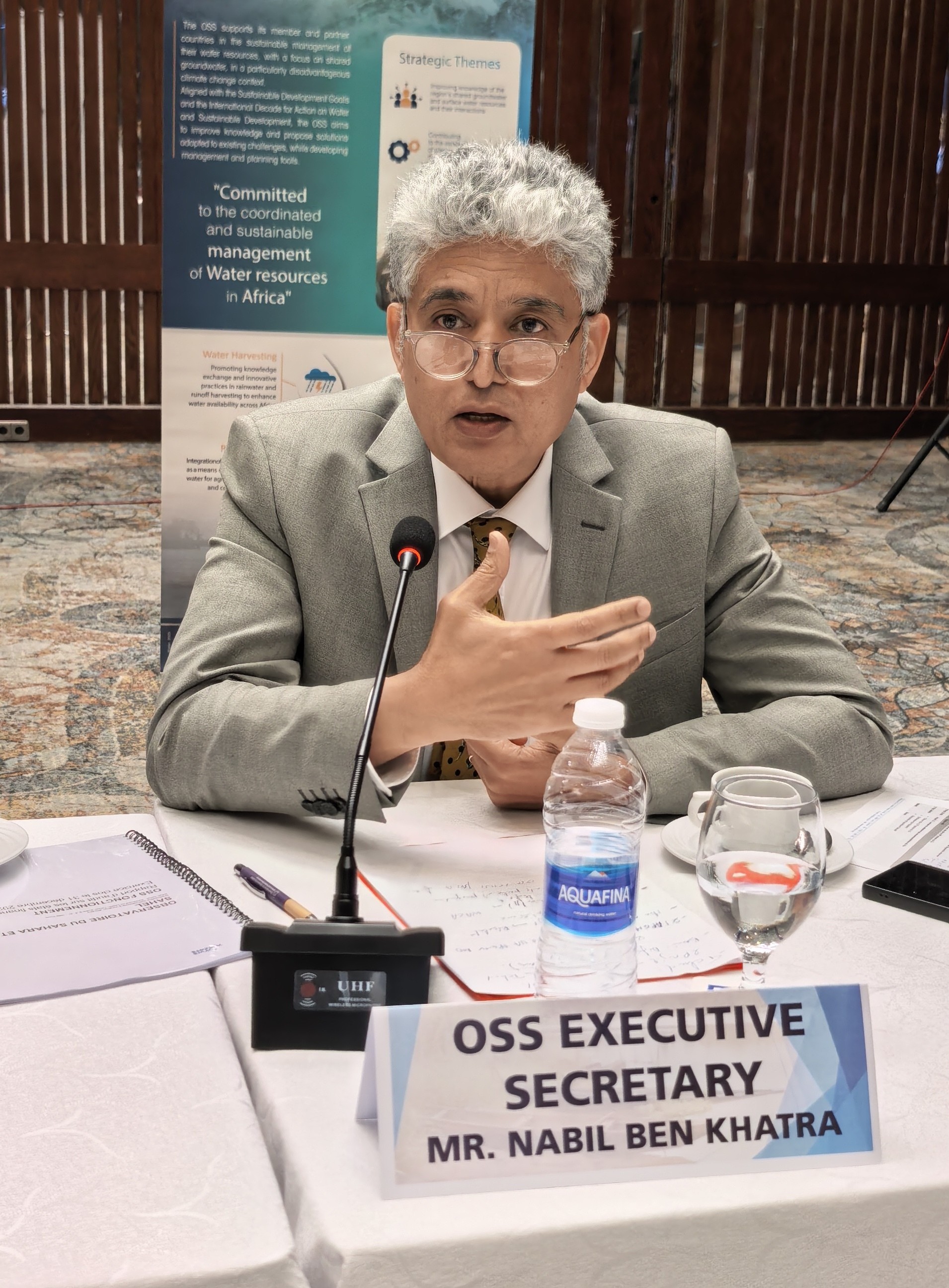
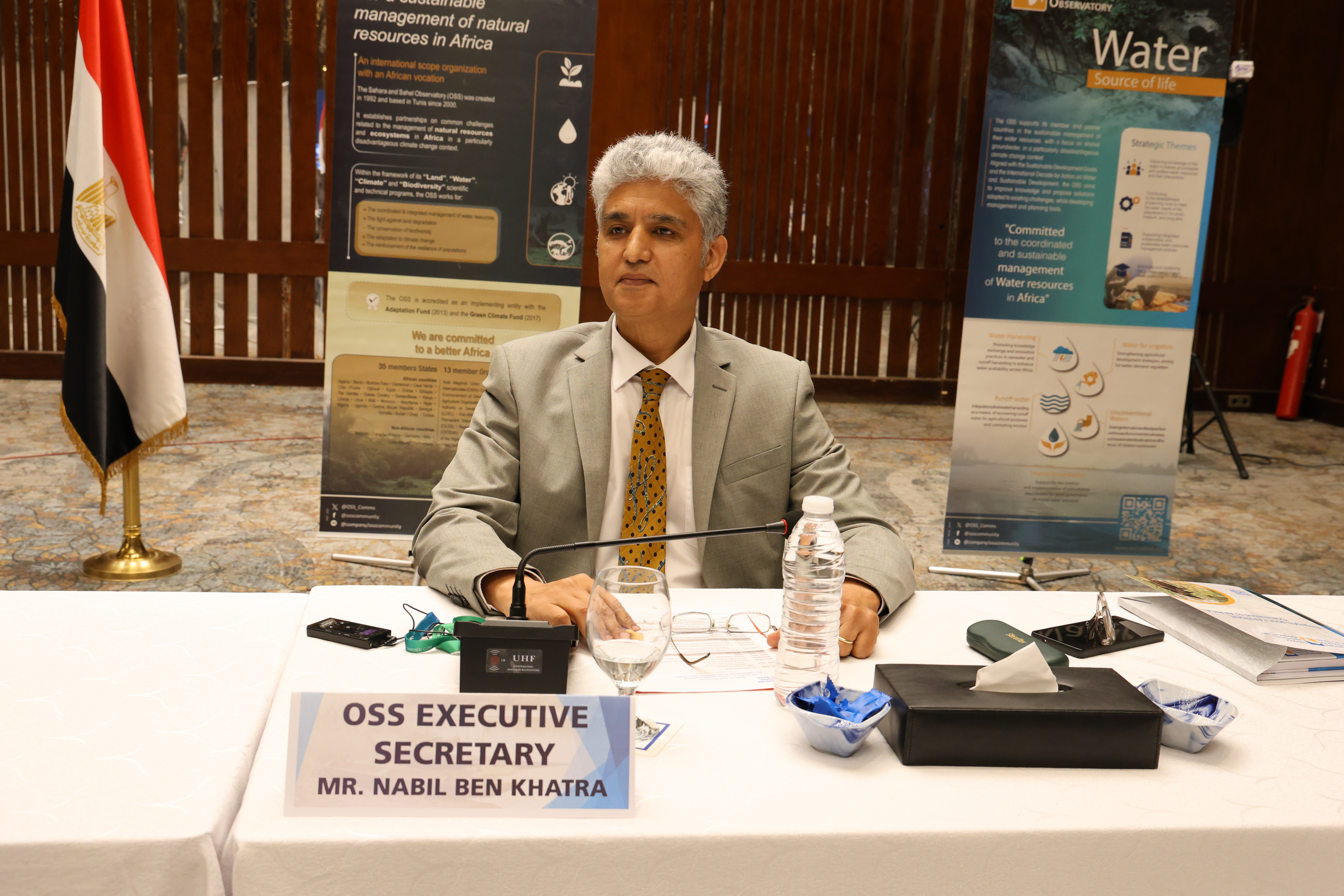
The OSS Executive Secretary, Mr. Nabil Ben Khatra, framed the discussions within the context of an increasingly complex “international landscape” shaping the Organization’s institutional choices. He referred to reduced public development finance, the shifting priorities of traditional partners, and the uncertainty surrounding multilateral commitments - pushing the OSS to “protect what has been built while adjusting its modes of intervention with the lucidity demanded by the current context.” He nevertheless described the Organization’s performance over the past year as “solid, structured, and fully aligned with the mandate of its Member States.”
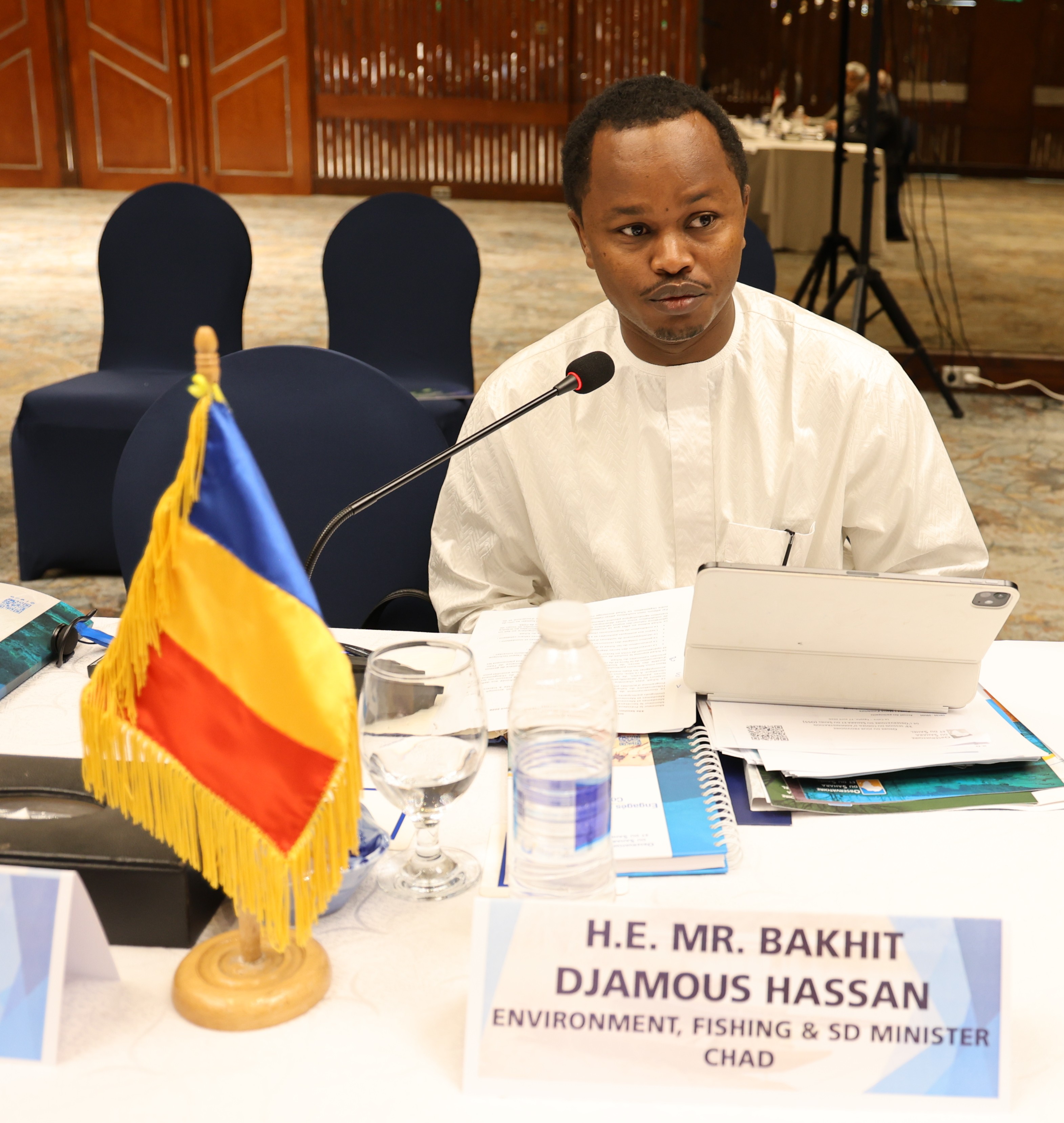
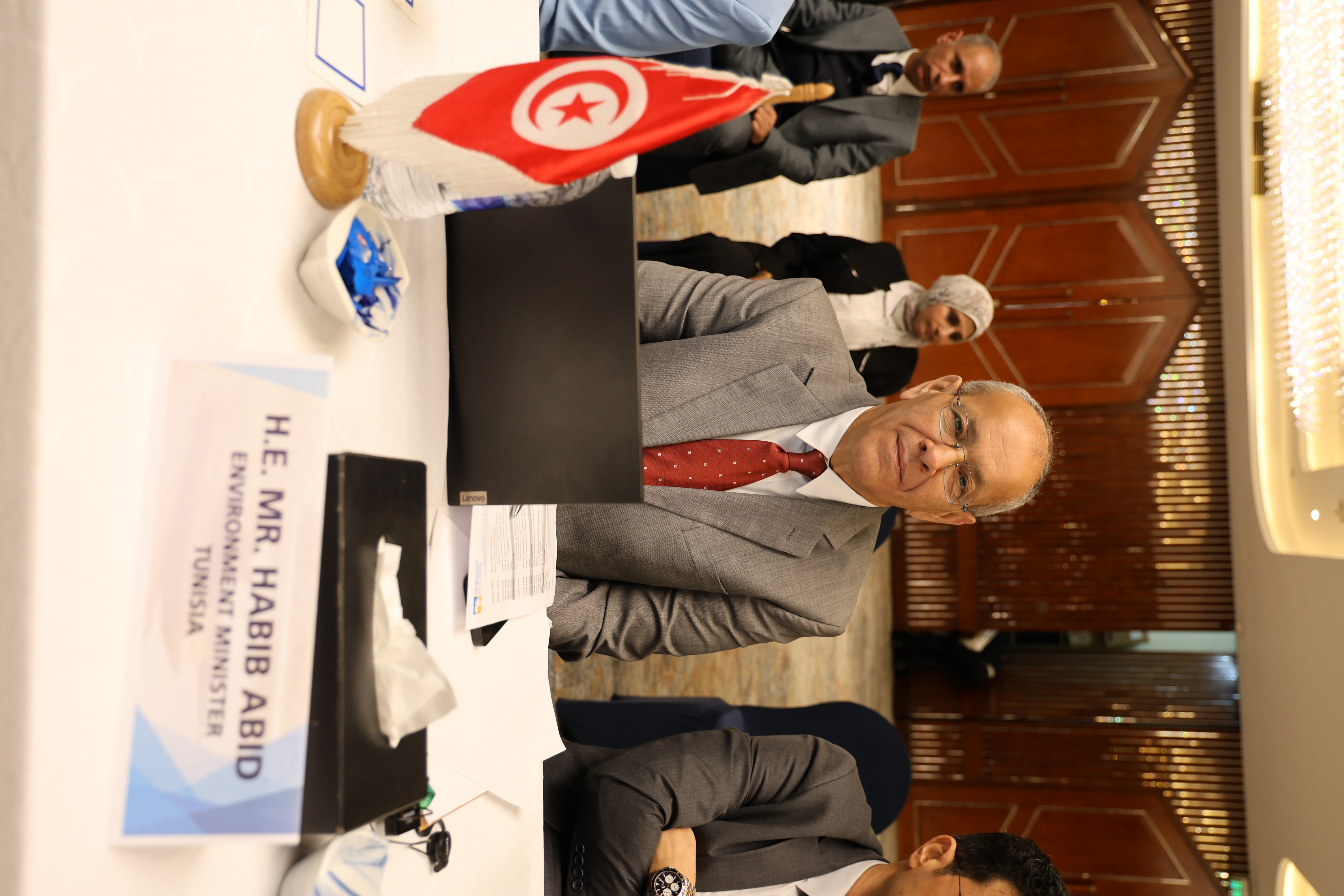
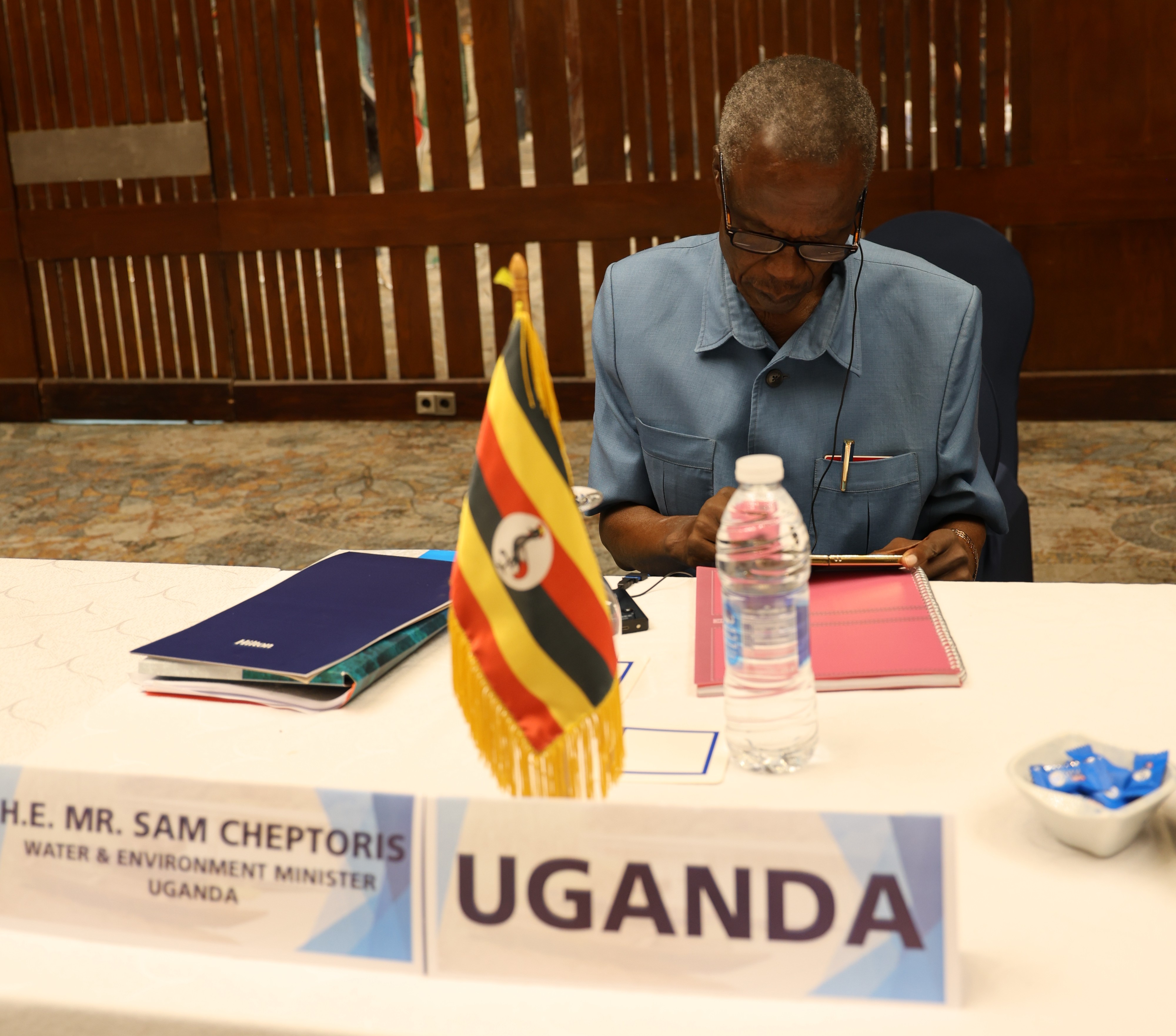
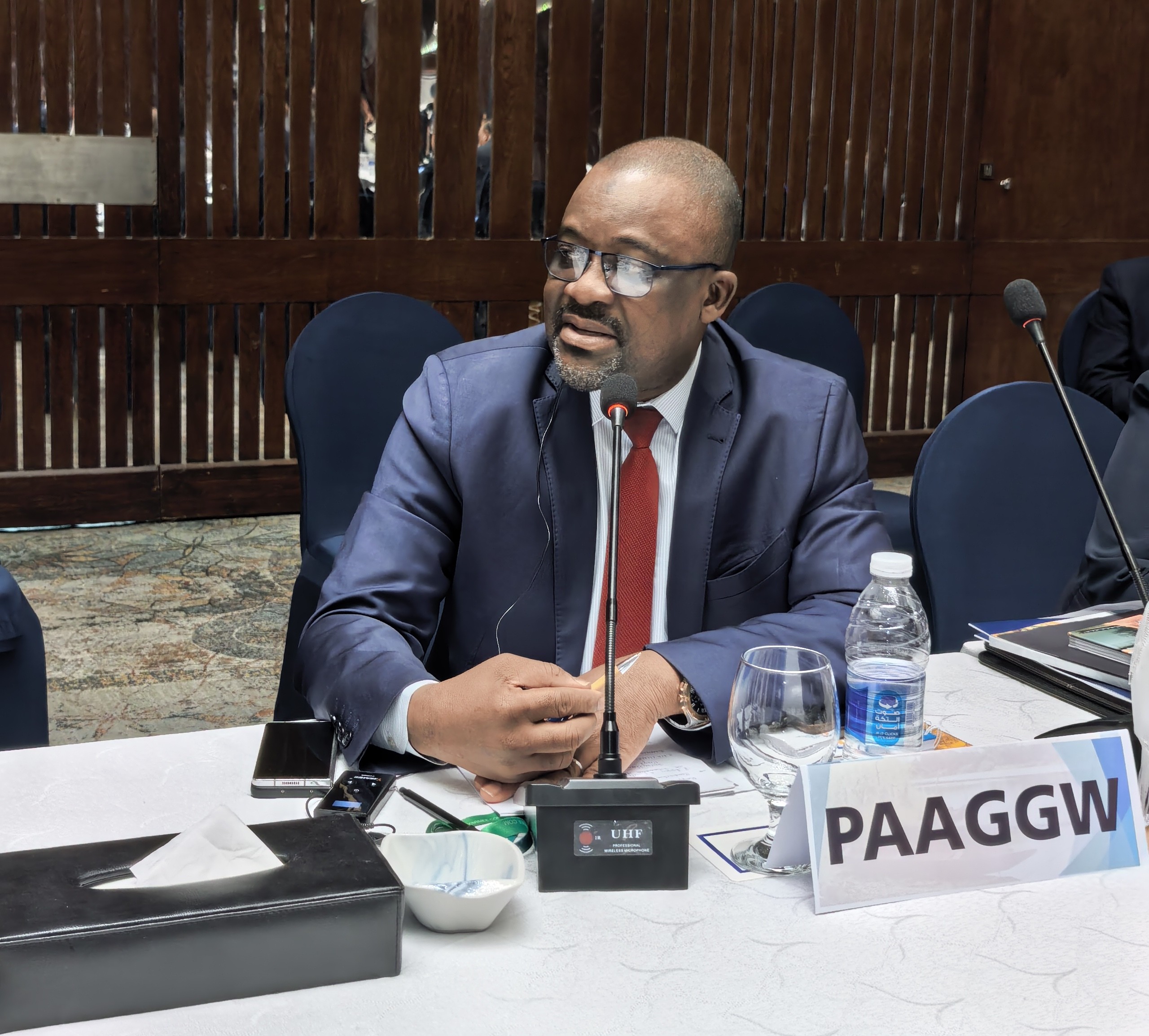
The meeting brought together a high-level ministerial audience. H.E. Mr. Habib Abid, Minister of Environment of Tunisia; H.E. Mr. Hassan Bakhit Djamous, Minister of Environment, Fisheries and Sustainable Development of Chad; and H.E. Mr. Sam Cheptoris, Minister of Water and Environment of Uganda, each reaffirmed their governments’ commitment to stronger African cooperation. Alongside them, H.E. Mr. Mustapha Garba, Executive Secretary of the Pan-African Agency of the Great Green Wall (PAGGW), highlighted the convergence of agendas between the two institutions and the need to join forces in combating desertification.
2025 was defined by a critical international context
The past year was marked by a growing convergence of climate, biodiversity, and desertification agendas, which had the OSS play its role as an interface between science, public policy, and field action. The Organization contributed to strategic reflections on sustainable land and water management, nature-based solutions, and climate change adaptation, namely leveraging Earth Observation and Artificial Intelligence.
This scientific momentum was matched by strong institutional recognition: the OSS election as Chair of the African Network of Basin Organizations, confirming its capacity to advance water diplomacy on the continent and opening significant prospects for transboundary management and regional cooperation.
Structuring decisions for the future of the Organization
First, the approval of the 2025 technical and financial reports. The Board endorsed an activity report marked by a significant scaling up of the OSS operations, particularly in land degradation monitoring, early warning systems, climate adaptation, and sustainable water management. The financial statements, reviewed in light of the external auditor’s report, were approved with no comments, confirming the rigor and transparency of financial management.
Second, good governance and integrity policies placed at the core of institutional functioning. Board members stressed the need to align the OSS with the highest international standards in ethics, accountability, and risk prevention, in line with the requirements of international donors, particularly climate funds.
Third, the establishment of committees and units dedicated to compliance, internal control, and strategic oversight. These new bodies will ensure the effective application of the rules, support operational teams, and guarantee transparent management of the activities.
Preserving the foundations while anticipating challenges
In his address, Mr. Ben Khatra called on the Board to give particular attention to several structural challenges. The first relating to the sustainable financing of the Organization’s core functions - watch, prospective, knowledge production, capitalization, and advocacy - that make the very foundation of our added value, yet remain inherently difficult to finance through project-based funding, he said. A thorough reflection on the OSS economic model is therefore required in an increasingly constrained resource environment.
The second challenge relates to human resources, described as “the Organization’s primary asset.” The ability to attract, mobilize, and retain high-level expertise is a major strategic issue that will ultimately determine the quality of services delivered to Member States. In this context, several statutory texts were revised and a new salary policy was adopted during the session.
An ambitious 2026 budget and the next session in Kenya
The Board also adopted the 2026 work program and budget, reflecting a clear ambition to expand the OSS areas of intervention and develop new strategic partnerships. The Organization’s editorial line will proceed, including the upcoming release of a book on climate in Africa, aimed at informing public decision-making and strengthening the positioning of Member States in international debates.
Kenya’s proposal to host the 34th session of the Executive Board was warmly welcomed. The date and modalities will be determined in consultation with Member States.
This Cairo session confirms one key point: the OSS now aims to position itself not only as a scientific and technical actor, but as a reference institution in its governance, unifying in its action, and clearly focused on the future of the African continent.
Held on January 28, 2025 in Tunis, the 27th session of the Strategic Orientation…
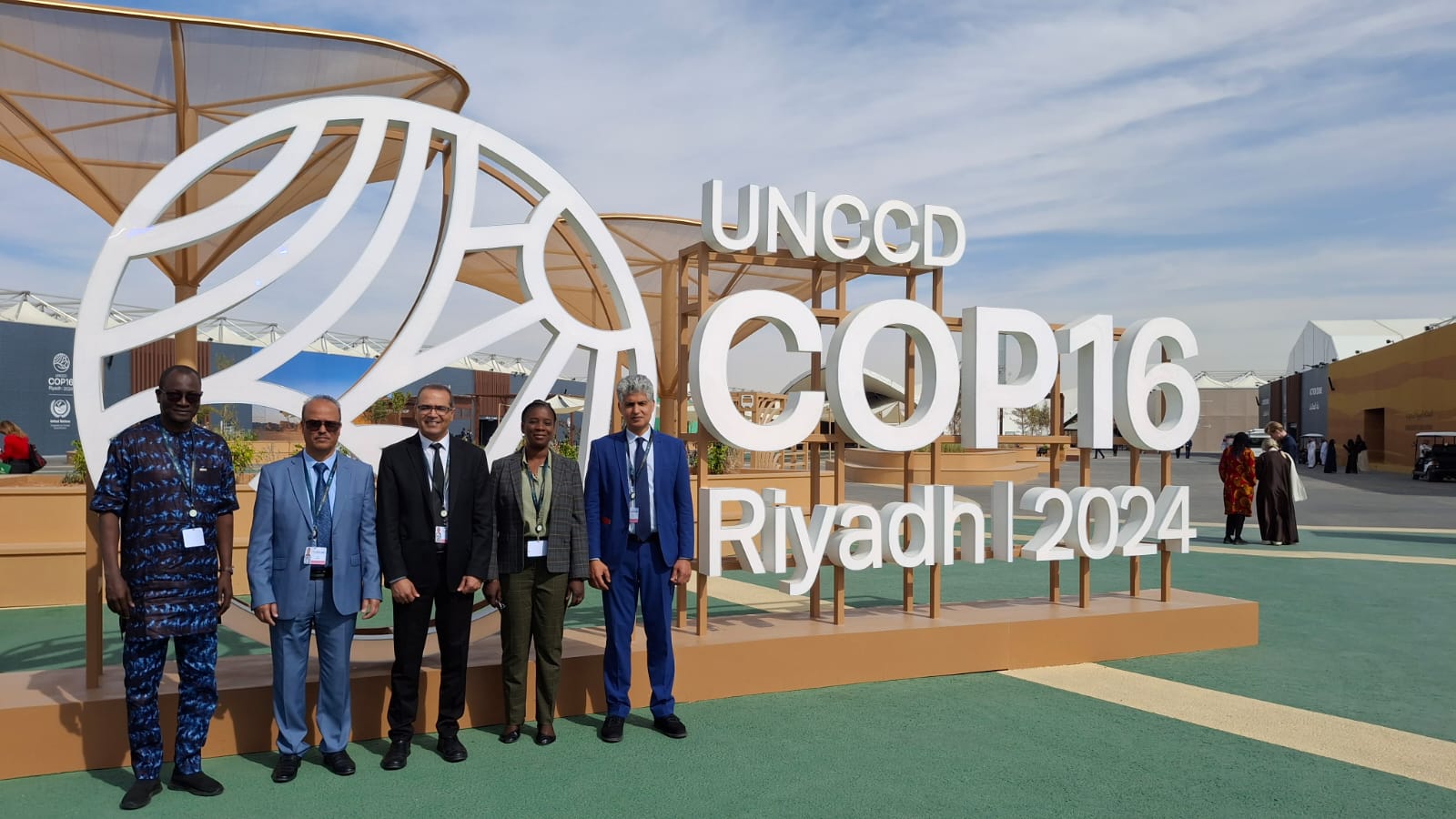
The participation of the Sahara and Sahel…
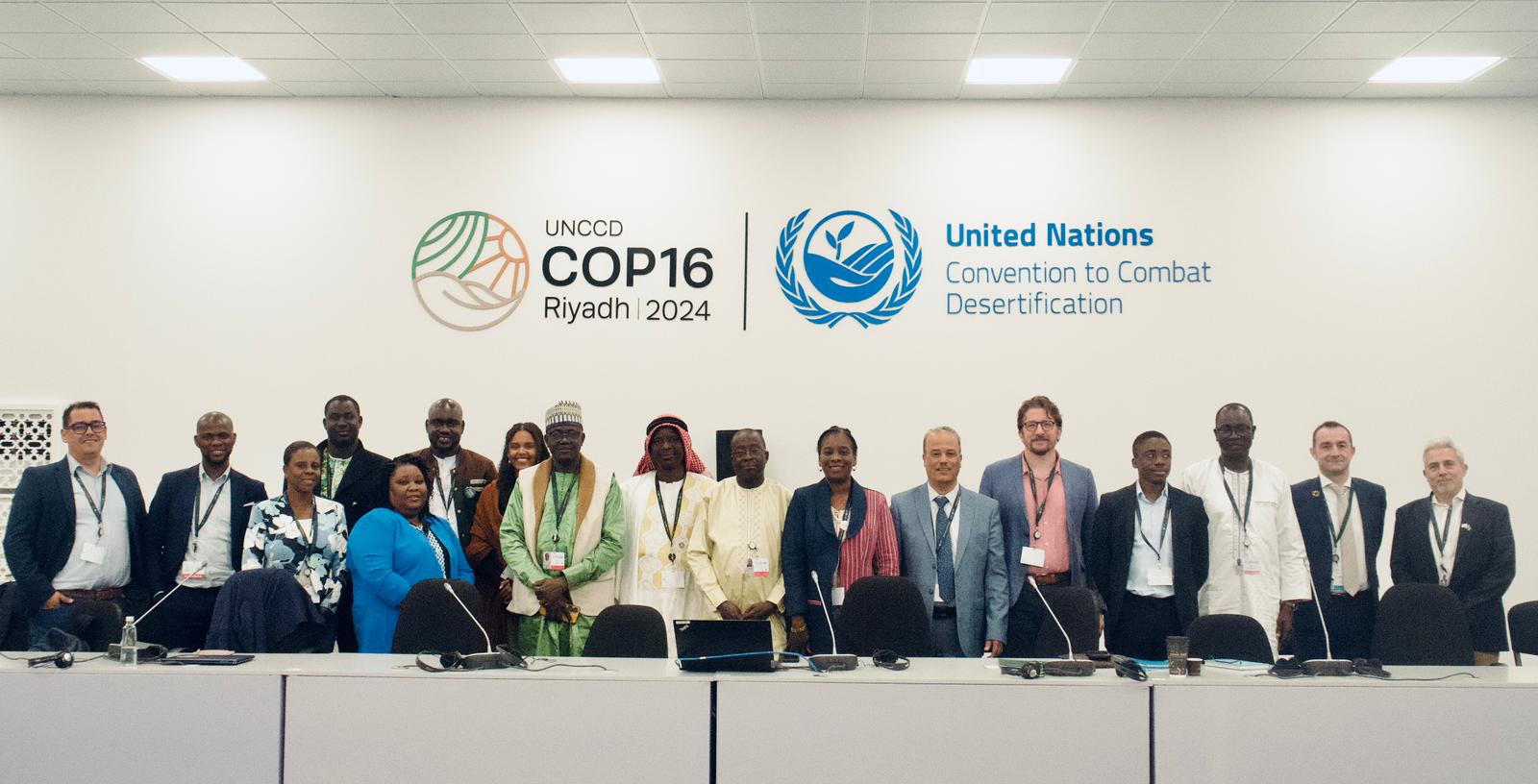
OSS Side Event at COP16: Strengthening Resilience in the Sahel through Multi-…